Quick Reference: CDNs

A CDN (Content Delivery Network) is a geographically distributed network of servers that helps deliver content (such as web pages, images, videos, etc.) to users from servers that are geographically closer to them, resulting in faster page load times and better user experience.

A CDN typically works by storing cached copies of a website’s content on multiple servers distributed across different geographic locations, called edge servers. When a user requests content from the website, the CDN automatically redirects the request to the server that is geographically closest to the user, reducing latency and minimizing network congestion. The CDN also helps to distribute network load and protect against Distributed Denial of Service (DDoS) attacks, among other benefits.

Edge servers are a key component of CDN architecture. They are small-scale data centers that are strategically placed in multiple distributed locations around the world, as close to end-users as possible. 

When a user requests content from a website, the nearest edge server to the user intercepts the request and serves the cached content that exists on that edge server itself. If the content is not available, the edge server pulls it from the origin server, caches it locally, and then serves it to the requesting user.

Edge servers are designed to handle high traffic loads and to deliver content with low latency and minimal network congestion. They help improve the performance and reliability of websites by reducing the distance that data needs to travel, and by distributing network load across multiple servers.

25 CDN companies and what broadcasters generally use them for:

  1. Akamai – Used for live streaming, software downloads and website optimization.
  2. Cloudflare – Used for DDoS protection, load balancing and website optimization.
  3. Amazon CloudFront – Used for video on demand streaming, software downloads and website optimization.
  4. Fastly – Used for video streaming, website acceleration and API acceleration.
  5. Limelight – Used for online video, gaming, file downloads and website acceleration.
  6. Google Cloud CDN – Used for website optimization and application delivery.
  7. Verizon Digital Media Services – Used for video streaming, website acceleration and security.
  8. StackPath – Used for website security, bandwidth savings and website acceleration.
  9. CDN77 – Used for video streaming and website acceleration.
  10. KeyCDN – Used for website acceleration and video streaming.
  11. Microsoft Azure CDN – Used for website optimization, application delivery and video streaming.
  12. OnApp – Used for website acceleration and cloud-based applications.
  13. Rackspace Cloud Files – Used for data storage and content delivery.
  14. Internap – Used for CDN and hosting services.
  15. Instart Logic – Used for website and application acceleration.
  16. CenturyLink CDN – Used for media streaming and website acceleration.
  17. CDN.net – Used for website acceleration and video streaming.
  18. BelugaCDN – Used for website acceleration and content delivery.
  19. G-Core Labs – Used for website acceleration, video streaming and gaming.
  20. Tata Communications – Used for online video, website acceleration and content delivery.
  21. Mirror Image – Used for website acceleration and video streaming.
  22. CacheFly – Used for website acceleration and video streaming.
  23. Varnish Software – Used for website acceleration and API acceleration.
  24. Aryaka – Used for cloud-based network and application acceleration.
  25. Highwinds – Used for content delivery, live video streaming and website acceleration.

Note: This list is not exhaustive and there are more CDN companies in the market.

For more information please reach out to me. 👍 Comment, and Follow me. I look forward to hearing from you!

The Why Not Attitude for Job Success, Setting Boundaries, & Avoiding Burnout

You can excel in your passions. But it’s important to recognize those opportunities and say yes to them.

The philosophy of “Why not?” is not based on ignorance. Instead, it is a mindset that encourages openness to new ideas and experiences without immediately dismissing them. It is about approaching opportunities with a sense of curiosity and a willingness to take risks.

This philosophy of “Why not?” can work because it prompts you to consider things that may not have been previously considered, leading to new insights, opportunities, and directions. By embracing challenges and uncertainty instead of letting fear and doubt hold you back, you can discover new possibilities and grow as an individual.

Rather than blindly embracing every opportunity, the philosophy of “Why not?” is about considering the potential benefits and risks of a situation and making an informed decision based on your values and goals. With this mindset, individuals can approach their personal and professional lives with more creativity, flexibility and confidence, ultimately leading to greater success and fulfillment.

Are you feeling exhausted and at a loss as to how to succeed in your career while still maintaining a fulfilling home life? You’re not alone! The traditional methods of climbing the corporate ladder are not working for most women, leaving many feeling burned out and unfulfilled.

I know firsthand how difficult it can be to juggle the demands of a successful career with a rich personal life. For years, I struggled to keep up with the constant pressure and insane deadlines, never able to set boundaries that would allow me to thrive in both areas of my life. Eventually, I burned out and lost everything.

But I refused to give up. Using my expertise in human behavior, I carved out a new path to success that included intelligent boundaries and the ability to thrive both professionally and personally. And now I want to share my strategies with you, so that you too can achieve freedom and fulfillment.

Whether you work in management consulting, a male-dominated culture, a client-driven organization, an entrepreneurial endeavor, or under-resourced healthcare services, these strategies can help you create the exact boundaries necessary for success. So don’t wait – follow my journey, comment and like, and join an open forum where you can connect with other women who are ready to support you. It’s completely free, and if you’re not comfortable commenting, just send me a DM with a simple “hello”. I’m here and ready to help you thrive.

9 Tips for Women in Business

1. Prioritize self-care: Make your physical and mental health a priority. Prioritizing self-care habits such as getting enough sleep, exercising regularly, seeking support from friends and family, and managing stress can help prevent burnout and increase productivity.

2. Have SMART (Specific, Measurable, Attainable, Realistic, Time-Based) goals for your careers and put systems in place to achieve them. By identifying achievable goals and breaking them into smaller, more manageable steps, women can avoid the feeling of being overwhelmed and stay motivated.

3. Learn to delegate: Delegating tasks to other team members, including household tasks, this can create more time and energy for your careers and reduce burnout.

4. Build a support system: Networking and building a support system of like-minded women can be beneficial for navigating challenges and responsibilities that come with a demanding career.

5. Practice time management: Effective time management can help juggle both work and personal obligations. Prioritizing tasks and setting boundaries for how much time and energy to allocate to specific tasks can help be effective.

6. Use technology to your advantage: Technology can be a useful tool to manage tasks, team communication and efficient work processes which can help maximize time and reduce stress.

7. Seek flexibility: Create a job that is flexible or allows for remote work arrangements. This can help create more work-life balance by eliminating long commutes and taking charge of schedules that may not work as per their needs.

8. Take breaks: Taking regular breaks throughout the day, and in life in general, can help you recharge and return to tasks with a renewed focus and energy.

9. Not sure about achieving your goals? Develop a Why Not? attitude. Don’t give yourself excuses of why you can’t achieve your goal. Don’t look at the barriers or how “something has always been done”, don’t be afraid to challenge the norms, find out about a company you can help, and the solutions you can provide. Why Can You Do It? Keep an open-mind.

👍 Follow, Comment – it’s free!

Tips on Promoting, Creating, & Encouraging A Safe, Mindful, Creative Work-Space

A widely spoken about topic. Let’s get Specific! Vagueness & Ambiguity lead to uneasiness, and doubt. DeBunk the mystery starting now. We are in this together.

Foster an open and inclusive culture where everyone’s ideas and perspectives are valued and respected.

• How is this implemented?

To foster an open and inclusive culture where everyone’s ideas and perspectives are valued and respected, one can try implementing the following:

1. Encourage open and transparent communication channels within the organization, such as regular meetings, online forums, or suggestion boxes, to allow employees to express their ideas and opinions freely.

2. Actively listen to and consider each person’s input, regardless of their experience or rank in the organization.

3. Establish a code of conduct that promotes respect, dignity, and autonomy for all employees and stakeholders.

4. Provide ongoing training and education about diversity, equity, and inclusion to ensure that everyone understands the importance of respecting different perspectives and experiences.

5. Celebrate and acknowledge the diversity of employees’ backgrounds, experiences, and opinions to create a sense of belonging for everyone within the organization.

6. Encourage collaboration between employees at different levels of the organization, across departments, or even across organizations to promote knowledge-sharing and teamwork.

By fostering an open and inclusive culture, you can create an environment that encourages innovation, creativity, and problem-solving.

Organize regular brainstorming and ideation sessions where everyone in the team can freely express their ideas and opinions on a given topic.

• Guidelines on how this is implemented:

To successfully implement regular brainstorming and ideation sessions in where everyone in the team can freely express their ideas and opinions on a given topic, one can follow these steps:

1. Choose a facilitator who can guide the brainstorming session effectively and ensure everyone has the chance to participate equally.

2. Define the topic or problem you want to solve and provide background and context to the team.

3. Set clear goals and objectives for the brainstorming session and communicate them to the team.

4. Ensure that everyone is aware of the brainstorming session in advance and has time to prepare their ideas and thoughts.

5. Establish rules of engagement, such as no criticism or judgment during the session, and encourage all participants to listen actively and respect others’ opinions.

6. Provide tools such as whiteboards, sticky notes or online collaboration software to help organize and capture everyone’s ideas.

7. Continuously iterate the ideas on the whiteboard, grouping similar ideas and discussing potential solutions to the problem.

8. After the brainstorming session, follow up with the team to provide feedback and insights on the ideas generated during the session.

By implementing these steps, you can effectively organize regular brainstorming and ideation sessions that foster open communication, encourage creative thinking, and generate innovative solutions.

Encourage cross-functional collaboration between different teams and departments to promote knowledge-sharing and collaboration.

How is this implemented?

To successfully encourage cross-functional collaboration between different teams and departments, one can follow these steps:

1. Identify the key teams and departments that can benefit from collaboration, and define specific projects or initiatives where collaboration is needed.

2. Develop clear objectives and requirements for the project and communicate them to all teams and departments involved.

3. Assign clear roles and responsibilities to each team and establish clear channels for communication and collaboration.

4. Encourage regular check-ins and progress reports between teams to ensure everyone is on the same page and to identify and address any potential issues that may arise.

5. Provide opportunities for team members to socialize and interact outside of work hours, such as team-building activities or events, to build relationships and trust.

6. Provide training and resources to help team members develop the skills necessary for successful collaboration, such as effective communication, conflict resolution, and problem-solving.

7. Recognize and reward successful collaboration by acknowledging individual and team contributions, celebrating successes, and sharing best practices within the organization.

By implementing these steps, one can foster cross-functional collaboration between different teams and departments, promoting knowledge-sharing, and collaboration that can lead to increased creativity and innovation in the workplace.

Provide opportunities for professional development and training to help build skills and knowledge in collaborative thinking and problem-solving.

Set clear goals and objectives for collaboration and reward team members for their contributions to the collaborative process.

• How is this done?

To set clear goals and objectives for collaboration and reward team members for their contributions to the collaborative process, one can follow these steps:

1. Define the scope and purpose of the collaboration project and ensure that it aligns with the overall goals and objectives of the organization.

2. Establish specific, measurable, achievable, relevant, and time-bound (SMART) goals and objectives for the collaboration project, and communicate them to all team members involved.

3. Break down the project into specific tasks and assign clear responsibilities to team members, providing them with the necessary resources, support, and training to achieve their goals.

4. Set up regular progress update meetings or check-ins to track progress against the established timeline, goals, and objectives.

5. Celebrate individual and team achievements, acknowledging and rewarding team members’ contributions to the collaborative process.

6. Allocate resources, such as funding, time, and technology, to ensure the collaboration project’s success and encourage team members to think creatively and innovatively.

7. Recognize and reward successful collaboration by acknowledging individual and team contributions, celebrating successes, and sharing best practices within the organization.

By implementing these steps, one can set clear goals and objectives for collaboration and motivate team members to collaborate effectively, leading to increased productivity and success for the collaborative project and broadcasting organization.

Establish protocols and guidelines for effective communication and decision-making to ensure that everyone is on the same page and working towards the same goals.

• How are protocols and guidelines established ?

To establish protocols and guidelines for effective communication and decision-making, follow the steps below:

1. Establish a communication plan: Determine the communication channels, frequency, and methods to be used during the project. Ensure that everyone on the team is aware of the communication plan.

2. Define decision-making processes: Establish clear decision-making processes, including who has the decision-making authority, how decisions will be made, and what happens after the decision is made.

3. Develop a code of conduct: Establish a code of conduct that outlines expected behaviors for project team members, including respect for colleagues, professionalism, and promptness in responding to communications.

4. Set clear expectations: Clearly define the responsibilities of each team member, including when and how to report progress or raise concerns.

5. Provide training: Provide training on effective communication, negotiation, conflict resolution, and decision-making.

6. Use collaborative tools: Use collaborative tools, such as virtual meeting software and project management software, to facilitate communication and decision-making.

7. Monitor and evaluate: Monitor and evaluate the communication and decision-making processes throughout the project to identify areas for improvement.

By adopting these strategies, one can create a collaborative and open-minded culture that fosters creative thinking, innovation, and collaboration, establish protocols and guidelines for effective communication and decision-making, ensuring that everyone is on the same page and working towards the same goals. This will promote a successful project outcome.

Please 👍 follow, and subscribe – it’s free!
Mastering the Basics of Layer Protocols: Elevate Your Network Performance Today!

The layer protocol that follows the order from lowest to highest is:

1. Physical layer: This layer defines the physical interface between a device and a transmission medium, such as copper wires, fiber optic cables, or wireless signals. It deals with the physical transmission of data bits over the medium.

2. Data link layer: This layer provides error-free communication between two nodes in a network by handling the framing of data into frames, error detection and correction, flow control, and addressing. Examples of protocols operating in this layer are Ethernet, Wi-Fi, and Bluetooth.

3. Network layer: This layer provides end-to-end connectivity between devices across multiple networks. It handles routing, forwarding, and logical addressing, and its protocols include IP, ICMP, and ARP.

4. Transport layer: This layer provides reliable end-to-end communication between processes on different hosts using services such as segmentation, flow control, congestion control, and error recovery. Examples of transport layer protocols are TCP and UDP.

5. Session layer: This layer establishes, manages, and terminates sessions between devices, which can involve multiple connections and may span different transport layer connections. Its protocols handle session establishment, synchronization, and management.

6. Presentation layer: This layer provides data presentation and formatting services to applications by translating data into a format that the application can understand. Examples of this layer’s functions include data compression, encryption, and character encoding.

7. Application layer: This layer provides services directly to the end-users, such as web browsing, email, file transfer, and video streaming. Protocols operating in this layer include HTTP, FTP, SMTP, and DNS.

Examples of protocols and technologies for each layer are:

1. Physical layer: Ethernet, Wi-Fi, USB, HDMI, Bluetooth, NFC, DSL.

2. Data link layer: Ethernet, Wi-Fi, Bluetooth, Frame Relay, HDLC, PPP.

3. Network layer: IP, ICMP, ARP, OSPF, BGP, IPsec.

4. Transport layer: TCP, UDP, SCTP, TLS, SSH.

5. Session layer: Remote Procedure Call (RPC), NetBIOS, AppleTalk Transaction Protocol.

6. Presentation layer: Encryption (e.g., AES), compression (e.g., gzip), ASCII, Unicode.

7. Application layer: HTTP, FTP, SMTP, DNS, SSH, Telnet, SNMP, SIP, POP3, IMAP.

Feel free to add any information, leave a comment, and like my content.

Tips: Breaking into the Broadcasting Field

You will need to gain (over time) extensive knowledge and experience in the field. Here are some steps you can take:

  1. Get a degree: A bachelor’s degree in broadcasting or a related field can provide you with a strong foundation of knowledge and skills required in broadcasting.
  2. Gain hands-on experience: Get involved in student radio, TV stations, or other broadcasting organizations to gain hands-on experience.
  3. Specialize: Choose a niche or specialty field within broadcasting, such as sports, news, entertainment, or production, and become proficient in it.
  4. Stay current: Stay up-to-date with the latest trends, technologies, and developments in broadcasting by attending industry events, webinars, and workshops.
  5. Build a network: Build connections within the broadcasting industry by attending conferences, industry events or joining related groups on social media.
  6. Share your expertise: Share your knowledge by writing articles, giving talks, or teaching others in the broadcasting community.

Remember that becoming an SME takes time and dedication. Continuously developing your skills and expertise will boost your career and improve your chances of becoming an SME in broadcasting.

Giving Yourself Credit

If you’re like me, you beat yourself up for every mid-step, mistake you make, big or small. I played softball yesterday and made a ton of good plays, ran for first to be safe like a jet, scored at home plate twice by out running the throw, but also was thrown out once at second base, bobbled a ground ball and didn’t get the runner. I remember the mistakes more than the good stuff.

The same goes for my golf game. I hit the ball straight most of the time, but a lot of the time I don’t hit it very far, or get “air” on it. The ball rolls down the fairway pretty far at least and is competitive. But, if I’m swinging over water I choke. If I swing out of a bunker or high grass, I chip like a champ. My tee shot is terrible, my short game is awesome. I love chipping and putting. I practice driving on the range into the water, and I hit equally good and bad shots. Putting and chipping, I’d say I do what I want to do and am successful 90% of the time.

On the driving range

What do I remember most? The misses. It’s time to change that. Especially after all my lofty (pun intended) plans in January. They weren’t resolutions, they were plans.

I also wanted to write everyday. I’ve written some, so I’ve attained that. But, I haven’t written everyday and posted it like I planned to.

I wanted to improve my running time, I hurt my ankle and had to take downtime, so now I started over again last week – slowly.

The Swimming – ankle support

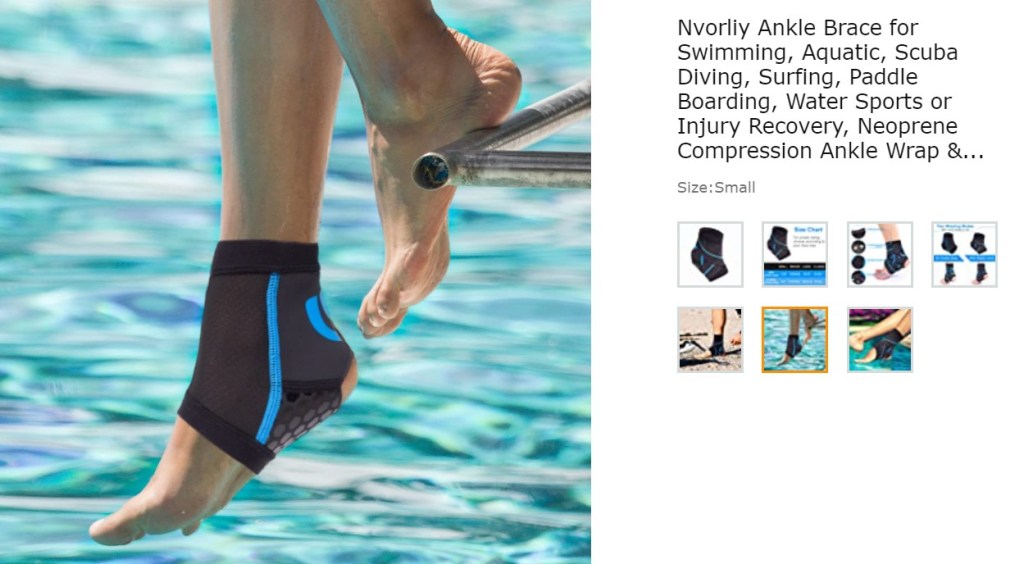
I swim, I’m trying to improve my lap time, but my ankle kept torquing there too, I had to get a swim ankle brace, but I’ve been able to swim regularly again now, and my lap time has improved, and I now do over a mile 5-6 days a week. Days that I feel tired, I have a slower lap time, I beat myself up for going so slow all the way home, but try to shake it off while making dinner.

At work, I can do every right. Cross all I need off my list, and I feel accomplished. Then I realize I forget to get an essential ingredient(s) for dinner at the store. What do you think I think of? Not the accomplishments, but then I pivot on the dinner, and make something else, most of the time it turns out better than I thought it would.

Improvising works!

So, my point it, it’s time to reset. Reset your thinking if you’re like me. Remember the good, the great, the lucky break even. Yes, I’d rather be great or even good than lucky, but I’ll take the luck, any day.

We all need some encouragement sometimes, so hopefully this has helped someone recalibrate their mindset to remember the good or great things you’ve done and accomplished up to now. And, if you’ve taken mid-steps or not even started your plans for 2023, reset now.

There are 24 hours in a day. You can restart your 24 hours at any time, whether it’s 10am, 2pm, or Midnight. It’s YOUR 24 hours. Let go of any regret of not even starting what you set out to do – YET. You can start your 24 hours now, or anytime you choose.

Love Yourself First, the rest Will come. Act and think like “it’s on its way”, and it will come. You need to think that it’s coming first, then it will. Be patient, be persistent, be courageous, be humble, be grateful.

Love yourself like you’re the last YOU on earth, because you are.

Your Big Break

It’s not a puzzle to be solved

You’ve worked and worked. Shown up, gone above and beyond at work, with friends and family too. You’ve volunteered for the food bank, and local toy drive, helped neighbors with packages, and driven them to appointments they forgot about, and they didn’t want to take a car service.

You’ve gone to holiday gatherings for over a month for work and with friends. You’ve networked with your business contacts, sent notes, emails, well wishes done everything possible to bring good will to others.

Work is great, your friends and family are great, you’ve taken care of your significant other. Now what ?

It’s YOU time, that’s what!

Don’t forget about Yourself. I learned 12 years ago (on my yoga mat) that taking time for yourself is Not selfish, it’s actually one of many self-less things you can do for yourself and others. Ummm hmhmmm – it’s true.

Say what now?

Take one hour for yourself Today in anyway you’d like. A walk, meditate, if you want movement involved – work out (today I worked out, then did yoga, later I’ll play a little golf), listen to music, take a bath, swim, read, write, play an instrument, play /practice a sport, but do it. Yes Today!

You should set aside time everyday for yourself. It doesn’t always need to be an hour, just set aside some “boundary time” (time you will not be disturbed). No kids, no family, no friends, no texting, no social media – just where you’re doing You, unplugged to reset. No bills, no cooking, no cleaning, no kids (even for 5 minutes), breathe…..

This brings you back to you, the best version of you gets to emerge from this practice because not only your wants are met, an intrinsic Need of Re-connecting with yourself occurs.

You don’t know what to pick? It doesn’t HAVE to be any one thing. Pick one thing a day to try. Try something new. I chose yoga, it was the single greatest thing I did, because I didn’t even know at that moment how much I needed it yet. I just wanted to get out of the house, be with people – and try a class at my new gym. This year, learning golf and its process has me in the same zone. It’s amazing.

After the new year I’m taking a 4 day completely unplugged break. No phone, no email, no phone calls (except for emergencies only). I haven’t had a break since COVID began. Working and living at home has crossed some serious time boundaries, every day seemed to run into the next until I set some boundaries.

Exception: In an emergency, “me” time can be interrupted – but the house better be on fire! Ok, maybe not literally on fire, but I think I’ve made my point.

And, if I haven’t made my point. My point is take a break before you do!

Everyone needs even a quick reset, make it a 5 minute a day practice to start (and build from there), I guarantee others will see a positive change in you before you do. You’ll be healthier and much happier.

You’re worth it, believe it, own it, be it. You have permission to just think of yourself for at least 5 minutes a day – for the rest of your life. Then, you can return to your job, following up on tasks, the carpool, doing the dishes, grocery shopping, cleaning up after your pets and loved ones.

This is not a New Year’s resolution. Leave all your worries and things to do outside a virtual or physical door. When I step onto my yoga mat or write, nothing else exists at that moment in time. I can compartmentalize with such focus that nothing else exists, it’s almost like being in a trance. There are hours I’ve easily written through, and stepped onto my yoga mat hundreds of times, hearing just the voice of the instructor, going through the entire class, moving through each Asana, and found myself at the end not even realizing that someone else was in the room with me. It’s transcendent. It’s transformative.

It’s what I didn’t even know that I needed. Permission. Permission to think of just that for that moment in time.

You have permission to break from the task filled universe and be selfish for yourself, then you can be of service and more of yourself with the world.

Do it, you have Permission.

The Broadcast Engineer Unicorn

#Offering Help: #Mentoring, #Writing, & #Engineering Services

I’ve been fortunate throughout my 33 year career to have found many mentors. I now happily find myself still working, but also mentoring the next generations of broadcast employees. Not only to have had such a diverse career So Far – it’s certainly far from over, but a female engineer in the world of broadcasting I have been termed a Unicorn. Who me? Yup!

Indeed, for many many years I have found myself to be the only female in the room. The only adult in the room, but that’s another story. I’d be promoted into a full room of men and me. If there was another women, she was an assistant or secretary, so I’d do my best to be inclusive and share insight. Paying back the kindness that was so graciously bestowed upon me along the way.

Although, I have to say, I was underestimated along the way as well. I didn’t spout or boast my knowledge, pat myself on the back for a job well done, I just kept my mouth shut and did my job, and did everything I could think of to “move the needle forward” for women in broadcasting.

Unfortunately, back then the loudest person in the room was thought to be “right” or the most knowledgeable, I certainly wasn’t loud, so I took the brunt of a lot of wrongs. Should I have spoken up? Looking back, absolutely yes, I just didn’t have those tools in my toolkit – YET.

Finally one day, I started a new job in the control room. I had not only one woman boss, I had two! I felt lucky. I was in certain respects, in other respects – uh, not so much.

I won’t distinguish which was which, but one superior was never satisfied. If I took care of every single aspect of my job, went beyond what was expected, took initiative to do more, it still wasn’t enough. More was thrown at me (sometimes literally) and I would scramble to “figure it out”. I could ask the other superior clarifying questions, but mostly I was on my own, they were both busy, and that’s why I was there right? Sometimes yes, sometimes no.

Finally about 3 months in, the superior who was never satisfied went on a 2 week vacation. I was elated, and for good reason. The other “boss”, would check in with me, and on my 2nd day with just her in-charge, she physically came into the control room. I showed her all I did, what I was watching for, what I still needed to finish, and of course asked if I could help her with anything. A simple “Nope, I’ll be in my office, if you need anything, call. You’re smart, I trust you, and I know you won’t wait until you get into trouble to call me”. Then she left. Wow! What a feeling of empowerment.

To this day I do not know that that boss knows what she gave me. Autonomy for one thing, but also confidence. She gave me an example of how I wanted to be when I was in a position like that, respectful, inclusive, giving, everything I needed summed up in a short sentence. Not only did I learn what I wanted to be like, I learned something even more important, what I didn’t want to be like. I didn’t want to create/rule by fear every time I walked into a room, I didn’t want to make anyone feel less than, no matter who they were, I didn’t want to make anyone feel like they were only as good as their last mistake. And so, I’ve taken that goal and hopefully not only successfully achieved it, but surpassed it.

I knew what I wanted, so then I sought out through positive leaders/achievers in and outside of the company. Learned from their vast historical knowledge and applied it to new ways of developing standards. All the men and women of my past have made me who I am today.

Have I made mistakes? Absolutely. Really big ones? That’s an even bigger Absolutely. Have I learned and grown from them? Absolutely. Do I regret some? Absolutely. I don’t regret learning from my mistakes, I regret how I handled my failures sometimes. We all fail sometimes, or a lot of the time, but it’s how we get back up, how we recover that matters. It’s not how you start, it’s how you finish.

I cannot change the past though, I can only move forward with integrity and perseverance in the future. I can pass on my knowledge to usher in the new generations. And, I do.

In 2019 I took a seasonal broadcast streaming engineer position at MLB Advanced Media. I was fortunate to work with a newly assembled group of engineers. All men and me (a Re-occurring theme throughout my career). Not only was I the only woman, I was also the oldest person in the room by far. The youngest wasn’t even born when I graduated college, he wasn’t even of drinking age yet. But he was/is brilliant. The takeaway is to remain open, accepting, giving, and teachable. And, check your ego at the door.

It was a new system that we all rolled out in only 3 months, so we All were learning something literally brand new together. It was extraordinary. I had as much to learn, and unlearn as they did, but we did it all together. To this day it was hands down one of the best teams I was ever a part of. We all worked together in this small closet of a room, and we successfully streamed out 32 minor league team’s games for the season, ending in an all time high of adding in some major league games too. We all helped each other through processes and SOPs, it was amazing.

The season ended, some found other full time jobs, the rest of us stayed on part-time to work on Major League ballpark infrastructure upgrades in the off-season. Another great experience. But we did it together. I’ve gone back as a part-time employee season after season with great anticipation and openness to learning all the new tech forward innovation each year. I am truly grateful to have found MLB, and many others along my Broadcasting journey. I was asked once, “What will you do when or if they hire another girl/ woman for this office?”, my response was simple, “I’d throw a parade first, then make sure you all treated her with the same respect you’ve shown me (which was a lot, and it never waivered), or you’ll have to answer to me!” That was said with a somewhat joking lilt, but it was true then, and true now. That was verbatim comment recollection. Very smart, accomplished women were hired, and the respect was given, I was proud of this group of fine men and now women.

It’s not over yet – not by a long shot!

If you’d like to chat please feel free to contact me. I can learn just as much from you as you can hopefully from me.

Success at Job Hunting in the Universe’s Vacuum

If you want to be successful in job hunting, you need to be persistent and never give up. You need to believe in yourself and your ability to find the right job for you. The universe is full of opportunities, and it’s up to you to find them.

I started a great new position this week. After years of seasonal, and short contract work at various places, I wanted to find something full-time, and permanent. Permanent is a relative term to me. One can be “let-go” at any time these days, because there was a restructuring, not because one wasn’t doing well, for cause, or just lay-offs. It can be disheartening.

When I was offered my current job, I literally had gotten another offer the very same day, and a third offer the next day. I asked each possible new employer further clarifying questions so I could make an informed decision. That doesn’t give me any guarantees, but gives me the best chance at what I want and need. Note: I also only applied to jobs I really wanted, but was still looking because nothing was “final” until I, and the company have finished the on-boarding process. But, more on that another day.

FINDING THE OPPORTUNITY

Fear not, there are many opportunities out there, one just has to find them. Make looking for a job, a full time job in itself. Let me break it down a bit with some specifics. Set-up job parameters with automated Daily alerts on multiple sites, visit specific company sites daily (there are jobs there that are not posted publicly), filter for job keywords, position, desired location, (or on-site,remote/hybrid), and then of course latest or newest listings. This cut down on how “far” back anyone will have to cull through a seemingly endless list of jobs (most of which that wouldn’t fit one’s skill-set, or ones that aren’t of interest, or titled oddly). I only applied to jobs I wanted, and that I was at least 80%+ qualified for. My resume was updated nearly weekly to tweak it, and so was my cover letter.

BOTS

I’m sure job-seekers already know about HR bots: ATS system: Applicant Tracking System. It’s designed to automatically find keywords from the job description and find those skills in your resume automatically. If your resume doesn’t match up to a certain percent, then it automatically gets rejected, and the hiring manager, or HR person never gets to see your resume at all. So weave the keywords from the job description into your resume (assuming you truly have those skills), and your resume will actually get a human’s eyeballs to look at it.

Otherwise you’ll more than like get the dreaded automated response of, “while we are so excited that you’ve spent time applying for this position, and you’re highly skilled, we are not moving forward with your candidacy, and moving forward with other candidates that are more closely aligned with this position.” Even worse, you may have now been put into their system in an automatic reject for X amount of time. It’s true, so always try to present yourself in the best light, your effort upfront has big pay-off.

Now, keep in mind, every company must legally post a position even if they already know the candidate they Will be hiring. I’ve gone to job listings that were only a few hours old, saw there were no other applicants, but also was removed or “no longer available” almost as soon as it was posted. “Whatttt!!!??” The company legally did what they had to do, they posted the job, then removed it as soon as legally possible. I found this annoying at first, then took a different purview of the action, “at least I didn’t waste my time going through the entire application process”. It all depends on how you look at it. I chose the latter – be positive.

CONNECTION IS KEY

If you have a connection at a company you’re applying to, reach out to them. This is not just to ask them to recommend you, it’s also exploratory to find out more about the company, and if you want to work there too. It’s equally important for YOU to interview the interviewer about the company, culture, company and job challenges, who had the position prior to this, where did they move up or onto, and why. There are many other questions, but that’s a good starting point.

Next, there is the “quick apply” tactic. Job sites that offer a seemingly “one-click” application process, followed usually by a couple of generic questions like: Are you a US citizen?, Will you now or ever need sponsorship?, and are you at least 18 years old? I would advise if you decide to apply this way that you should also write a cover letter if the app provides the option. If not, note who the hiring manager or job poster is, and contact them through email if provided, or LinkedIn (In-mail).

DUE DILIGENCE

Don’t underestimate the cover letter. Many Recruiters and Hiring Managers automatically reject resumes from highly qualified applicants simply because there was no cover letter. Why? It shows interest, and a level of effort. Even if you don’t have the name of the job poster, or hiring manager, simply start with Dear Hiring Manager, then in the body of the cover letter say why you’d be great in the position, something that’s NOT in your resume and be positive.

Finally end with something like, “I look forward to hearing from you”. Then your signature. Boom! You’ve written a few short sentences and “Submit”. You’ve just upped your chances of being contacted by a Recruiter (whether in-house or not) by approximately 80%.

FOLLOW THROUGH

Lastly, if you haven’t heard anything for over a week, follow-up with a “checking in” email. Don’t ask for a response, the hiring manager and recruiter are very busy people. Just let them know you’re still interested in the position (you didn’t just one-click apply). A little effort goes a long way. If you’re willing to put the effort in before you have the job, you’re a good candidate to actually DO the job.

If you’d like more tips please leave questions in the comment section, or email me directly (it’s in the contact area of this site).

Good luck in your search. I look forward to hearing feedback from you!

Playing Thru Failing

Your chair at the table is waiting for you!

Whether you are just learning something new, or a seasoned veteran in your career, a new hobby, or completely pivoting your life choices, or how you approach “where you want to go next”, there are some simple premises that remain steadfast.

My actual golf bag

I started to learn Golf this year, I love it! I love the process, I love practicing driving the floater balls into the lake or range, I love putting and chipping areas, and getting even a half hour of practice in any day of the week that I can. In golf, my driving, isn’t that great – YET. But, my short game is actually wayyy better than anyone expected it to be (I’m not bragging, I have practiced a lot). I love to practice both driving, and “the short game” though. I actually have a lesson later today. With my “new” used Callaway Rogue clubs. I keep practicing BOTH areas which have very different approaches. The key is the consistency of practicing both areas, and sticking with it, even if I’m hitting a Callaway, Titleist, or my new favorite Taylormade’s Kalea ball well on any given day, even if the day before I was doing very well, the next day I may not (and usually don’t) do as well.

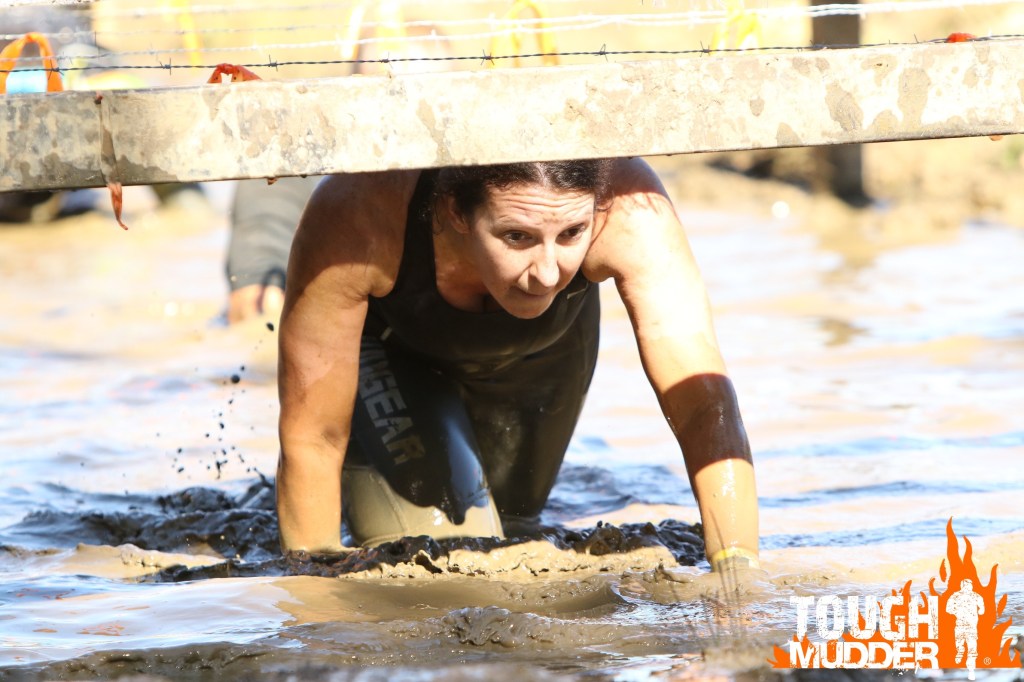
This is true in ALL areas of life, career, athletics of any kind. I play softball with a team. For the first time in years I’m playing again (re-learning some things), and I’m also learning pickleball (I used to play tennis regularly, so pickleball has been quite intuitive). I also swim, and run regularly, and have now done tough mudders. I have I found a great affinity for mudders because the premise is everyone helping everyone get through the obstacles together. I love the diversity of each sport, the skill set is different for each and every one of them. I employ this thinking when it comes to my work life, and career.

I’ve been fortunate to have had a truly varied work life. I’ve taken jobs that I knew would be a stretch for my skill set, where there was a lot to learn, and did them. How? Practice, reading, being curious, asking questions even before I accepted the job. That also lets the new employer know that you wish to grow and learn, and move forward, and that you are forward thinking.

The point is I had to be willing to fail too. If I kept trying, I could be “wrong”, but I didn’t necessarily “fail”. But I did “fail”, I took big swings, and sometimes I got a yes, and many times I got a “no”, but I kept going. I didn’t see it as a game, it was my life career, there was definitely a strategy.

Where did I start? I listed everything that I’d be happy to do, also what I wouldn’t be happy doing, and most importantly what would I be ecstatic to do. Then, within that, I listed things that I could already knew, what would be a challenge, and even further, what I didn’t think was even possible for me to do. It’s a tough list. Then I listed the WHY I had these beliefs. I then wrote beside that negative list, a positive list of how I could achieve what I thought to be impossible. The amazing thing was that breaking it down into these categories and the solutions to get where I wanted to be made it seem at least possible.

After much introspection came self awareness, looking at time, level of effort, how my life would change, how it would change my family’s life, I came to a much smaller list. I took the impossible list and broke each section down even more into chunks to begin. Just starting the list was the hardest part. It’s like going to the gym to workout sometimes, you don’t want to go, but when you get there you’re good to go, and revved up. It’s true. I began researching, and reading everything I could. Took every free webinar I could on what I wanted to learn, paid for others when I was ready, and suddenly I found myself suggesting things to my bosses. Again, not all winners, but I was putting myself out there.

If you don’t try and fail then you’re not reaching high enough. I built a time based formula, let’s say 6 months to a year. 10% would be things that I knew I could succeed at instantly, 20% I knew I could succeed at with a specific amount of research and effort (whether hands on or not), the next 20% I wasn’t sure if I could succeed in 6 months, but knew I could within a year, the final 50% were super stretch goals that I knew without great time and effort that I probably wouldn’t succeed at at all in a year. You know what? I found that with the time based goal schedule, a set plan for time and effort, I could reasonably do while still giving my family their much deserved attention, I succeeded at about 98%.

Career goals were actually easier to attain than my physical goals. I’m not a scratch golfer – yet 🙂 but I’m working on it. I’ve done the tough mudders, half marathons, triathlons, bike-a-thons, and finished them all, but I didn’t finish “as quickly” as I wanted, but I finished. The point has been each time I’ve progressed. Athletically I’ve always been active. I got hurt earlier in this year, I recovered in about 4 or so weeks, and started out slowly to rebuild. Then, I needed surgery. It turned out to be far more extensive than the x-ray had shown, but 6 weeks later I was allowed to begin just walking again. The area “weeped” for weeks, I kept a bandage on it, I even went to the pool and just did a couple of very slow laps. In no time I was back at it.

Then, a few months ago, I was jumping out of the way of someone walking their dogs, I hopped into the street and rolled my ankle. Ok, that was annoying, I walked it off, so I thought. It felt ok, I iced, I put a wrap on it, and a few days later I went off in the early morning to play softball.

At bat

All was ok in the world for that moment. Then, I hit the ball, and ran hard to first base, there was a soft spot/hole and my right foot happened to hit it, I popped forward and double hopped on my left foot, getting to first base – I was safe! My right ankle was a bit angry at me, but ok, so I thought. The next batter made the last out of the inning, so I went to get my glove, and went into the field.

I played 2 more innings, but didn’t get up to bat again. I came in from making a play, and as I was walking in, my ankle had spoken. “You’re done”, and as I walked in – limping now, I said out loud “I’m done scratch me from the line-up”. I didn’t fail here, I listened to my body. I iced it for the remainder of the game from the dugout. I went home and iced it a lot more, put the Futuro ankle brace on it, had an ice-boot in the freezer (life saver), ok, I think it’ll be ok. Not so much.

Futuro Brace

The next day, I couldn’t walk on it without a brace at all. I luckily made an appointment with a orthopedist immediately, and he took an X-Ray. I had broken this ankle in August 2018, I have a plate and 6 screws in it. Luckily all were in place, all the screws were in place, it was all soft tissue damage, and my posterior tibial tendon was “angry”.

The doctor told me I needed a walking boot for 6 weeks at least. “Ugh Really?” Really?? And not just the shorty one, one that went up to my knee (to immobilize all of the muscles surrounding my ankle), I could get one there or order one on Amazon. Since getting a walking boot through the doctor would cost about 6x more than ordering a really good one from Amazon, I ordered through them, and it was delivered, I kid you not the next morning before 10am for no extra charge. The Aircast Airselect Walker boot (yes all the way up to my knee) became my new best friend. It truly did its job beautifully.

I went to softball games just to cheer, I went to the gym to do upper body work, I went to the pool (took it off and left it by the steps), and gently walked in the pool, I couldn’t full out swim, but when I did swim, I just dragged my legs. I did “cast” yoga, anything that I could do I did. 6 weeks did not go by quickly.

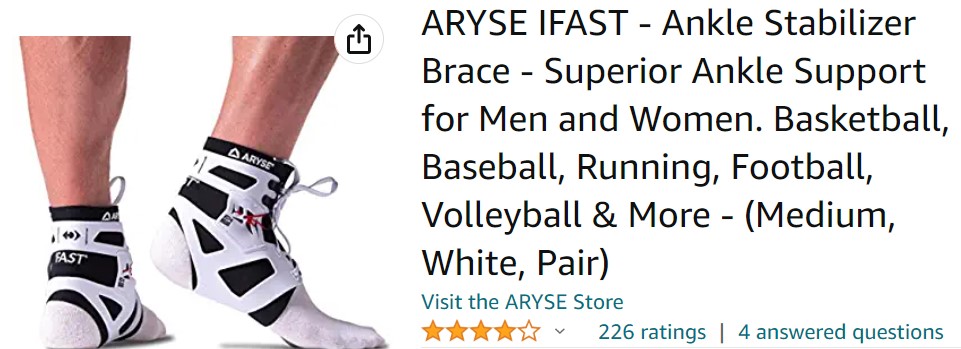
Then I was able to start wrapping my ankle again, so I walked around the house with just the wrap and good foot support. I finally went for a short walk for a couple weeks. I felt good, but I also ordered the Aryse IFAST Ankle Stabilizer Brace ankle support to fit IN a sneaker or shoe, and then they also have one that fits on the outside of my softball cleats the Aryse XFAST Exo Brace. Amazing, it’s all laced up and Ready To Go.

I’ve been playing softball, running and now swimming again (with the Nvorliy Ankle Brace for Swimming), no awkward kicks, and I’m still icing afterward, but I’m back in business. It sounds like a lot, but to restart and keep my ankle safe going forward, all necessary, and once it became routine, like anything else, it has become second nature, and I’m enjoying all my activities once again.

Again, I stress consistency, tenacity, taking decided chances, but also listening to your body, and stopping when you need to. Your body will tell you one way or the other. Listen to your body.

This does not just apply to sports, this applies to your work-life, and all life choices. If you give yourself the tools you need to do anything in life, you can accomplish it. Aside from reading, I watch YouTube videos for many things relating to my work (getting my CompTia Network+ certification), SMPTE2110 / AES67 Certifications, to golf tips. It all applies.

Never stop being curious, never stop trying. Put tasks into smaller attainable chunks, and build on that each day or week, whatever your schedule may be. Write is down. Write down your victories. Write down your failures, and what you’ve learned from them, and what you could do differently next time. Just keep trying until you get your win. No matter how big or little, just take it one step at a time, you are where you are at right now, just keep moving forward.