Discovering Your True Driving Force: Unveiling Your Superpower Beyond Job Titles

In today’s rapidly evolving world, the traditional career paths and job titles are no longer the sole indicators of success and fulfillment. It has become increasingly crucial to delve deeper into our own desires, talents, and passions to unlock our true potential. Understanding what truly drives us, regardless of the gig, enables us to articulate our unique superpower—a skillset that transcends mere job titles. This article explores the importance of recognizing the intersection of our passions, talents, and skills, and how it can guide us towards finding what’s next in our personal and professional lives.

The Power of Self-Reflection:
To embark on a journey of self-discovery, it is essential to engage in deep self-reflection. Take the time to ponder your interests, things that make you come alive, and activities that bring you joy. Reflect on your past experiences, both personal and professional, and the skills you have acquired along the way. By gaining clarity on your own passions, talents, and skills, you can start to identify the unique combination that forms your superpower.

Passions: Fueling the Fire Within:
Passions are the driving force behind our actions and pursuits. They are the activities and causes that ignite our enthusiasm and keep us motivated. Pay attention to the activities that make you lose track of time and bring you a sense of fulfillment. Your passions often align with your core values and can provide a compass for navigating your journey.

Talents: Unleashing Your Innate Abilities:
Talents are the innate abilities we possess—those natural gifts that set us apart. They can manifest in various ways, such as creative thinking, problem-solving, leadership, or empathy. Recognizing and nurturing your talents allows you to leverage them fully in any endeavor. These abilities often come effortlessly to you and can become the foundation of your superpower.

Skills: Sharpening Your Toolset:
Skills are the practical abilities we acquire through learning and experience. They are the result of deliberate effort and practice. While some skills may be specific to certain job titles or industries, many are transferable across domains. Identify the skills you have developed and consider how they can be applied beyond their current context. By expanding and honing your skillset, you become adaptable and versatile, ready to explore new opportunities.

The Intersection: Your Superpower Revealed:
The intersection of passions, talents, and skills is where your superpower lies. It is the sweet spot where you find fulfillment, joy, and a sense of purpose. Your superpower is not confined to a single job title or industry—it transcends boundaries. It is the unique combination that makes you stand out and brings value to any situation or role you undertake. By articulating your superpower, you gain the ability to communicate your true value to others, opening doors to new possibilities.

Finding What’s Next:
Once you have identified your superpower, you are better equipped to navigate the path ahead. It becomes a compass that guides you towards finding what’s next. Whether you are considering a career change, exploring entrepreneurial ventures, or seeking personal growth, your superpower serves as a guiding light. It helps you make choices aligned with your true essence and leads you to opportunities that resonate with your passions, talents, and skills.

In a world where job titles are evolving and career paths are no longer linear, understanding your true driving force is paramount. You must delve deep into your passions, talents, and skills to uncover your unique superpower—an amalgamation that transcends any particular job title. By recognizing the intersection of these three elements and articulating your superpower, you gain the confidence to embark on a fulfilling journey, embracing new opportunities that align with your true essence. Embrace the power within you and let it guide you towards a future where your personal and professional pursuits intertwine harmoniously.

Low-Tech Streaming: A Cost-Effective Solution for Broadcasting

In today’s digital age, streaming has become an essential means of communication and entertainment. While most streaming services rely on expensive equipment and high-speed internet connections, there is an alternative route for those seeking a low-tech approach. This article will guide you through the step-by-step process of setting up a low-tech streaming business, including the necessary equipment, platforms, and cost-effective streaming options.

Step 1: Equipment Selection:
To embark on your low-tech streaming venture, you’ll need a few essential tools:

  1. Camera: Opt for an affordable yet reliable camera that can capture video in at least 720p resolution. Consider a webcam or a compact digital camera with video capabilities.
  2. Microphone: Ensure clear audio with a decent quality microphone. USB microphones are budget-friendly and provide satisfactory sound for streaming purposes.
  3. Lighting: Good lighting is crucial for a professional-looking stream. Utilize natural light or invest in inexpensive LED lights to enhance visibility.
  4. Tripod or Mounting Stand: Stabilize your camera with a tripod or a mounting stand to avoid shaky footage.

Step 2: Choose a Streaming Platform:
Selecting the right streaming platform is essential for broadcasting your content to a wide audience. Here are a few popular options:

  1. YouTube: YouTube offers a free platform for live streaming. You can create a channel and schedule live events to interact with your viewers.
  2. Facebook Live: Utilize your existing Facebook account to stream live videos. Facebook Live provides a user-friendly interface and allows for audience engagement.
  3. Twitch: Originally built for gamers, Twitch has expanded to accommodate various streaming genres. It offers free streaming options and a robust community of viewers.

Step 3: Internet Connection:
While low-tech streaming focuses on minimizing costs, having a stable internet connection is crucial. Ensure you have a reliable internet service provider that can support your streaming needs. A minimum upload speed of 5 Mbps is recommended for a decent quality stream.

Step 4: Pre-Streaming Setup:
Before going live, take care of the following tasks:

  1. Test your equipment: Ensure your camera, microphone, and lighting are properly set up and functioning well.
  2. Plan your content: Prepare an outline or script to keep your stream engaging and organized.
  3. Promote your stream: Use social media platforms and your personal network to create buzz and attract viewers to your upcoming stream.

Step 5: Going Live:
When it’s time to start streaming, follow these tips:

  1. Engage with your audience: Encourage viewers to leave comments and questions, and interact with them during the live stream.
  2. Maintain a consistent schedule: Regularly streaming at specific times can help build an audience and establish a loyal following.
  3. Experiment with content: Explore different topics, formats, and ideas to keep your streams fresh and captivating.

Low-tech streaming provides an affordable and accessible way to venture into the world of live broadcasting. By selecting the right equipment, choosing suitable streaming platforms, and ensuring a stable internet connection, you can successfully set up your low-tech streaming business. Remember to engage with your audience and consistently produce valuable content to attract and retain viewers. Embrace the power of low-tech streaming and make your mark in the digital realm without breaking the bank.

Mogrts What About Mogrts ?? What the #%€! Are They?

Exploring Mogrts: A Comprehensive Guide to Creation, Usage, and Naming Conventions

Mogrts, short for Motion Graphics Templates, have revolutionized the way multimedia content is created and utilized. These pre-designed, customizable templates streamline the process of creating visually stunning motion graphics, making them popular across various industries. In this article, we’ll delve into what Mogrts are, their applications, naming conventions, how to create them, and the process from start to finish.

What are Mogrts?
Mogrts are pre-designed motion graphics templates created using software like Adobe After Effects or Premiere Pro. They contain animated elements, such as text, shapes, transitions, and effects, that users can customize to fit their specific needs. Mogrts offer a time-efficient solution for creating professional-looking graphics without extensive design skills.

Usage and Applications:
Mogrts find applications in a wide range of scenarios, including:

  1. Video Productions: Mogrts enable video editors to easily add visually appealing graphics, lower-thirds, titles, and transitions to their videos.
  2. Social Media Content: Mogrts can be used to create eye-catching animations for social media platforms, enhancing brand presence and engagement.
  3. Presentations: Mogrts help create dynamic slide transitions and animated elements for presentations, making them more engaging and memorable.
  4. Broadcast Design: Mogrts are extensively used in TV broadcasts to incorporate dynamic graphics, lower-thirds, and overlays seamlessly.

Naming Conventions:
To maintain organization and facilitate easy retrieval, adhering to consistent naming conventions for Mogrts is crucial. Consider including relevant information in the file name, such as the template’s purpose, style, version, and resolution.

Creating Mogrts:
To create Mogrts, follow these steps:

  1. Design in Motion Graphics Software: Use motion graphics software like Adobe After Effects or Premiere Pro to design your animated elements. Ensure the composition is set up correctly, with all necessary layers organized and labeled.
  2. Essential Parameters: Identify the customizable parameters within your design that users may want to modify, such as text, colors, or timing. Make these parameters easily accessible for customization.
  3. Export as Mogrt: Export your composition as a Mogrt file, specifying the compatible software versions and any required plug-ins. Include a preview thumbnail and a brief description to provide users with an overview of the template.

The Process from Start to Finish:

  1. Conceptualize and Design: Brainstorm ideas and design your motion graphics template in motion graphics software.
  2. Customization Options: Identify and define the parameters that users can modify within the template to suit their specific needs.
  3. Export as Mogrt: Export the template as a Mogrt file, ensuring compatibility and including a preview thumbnail and description.
  4. Distribution and Usage: Share the Mogrt file with intended users through various platforms, such as online marketplaces, cloud storage, or direct distribution.
  5. Customization by Users: Users import the Mogrt file into their chosen editing software and customize the parameters to match their content.
  6. Integration into Projects: Users incorporate the customized Mogrt into their projects, leveraging its animated elements seamlessly.
  7. Iteration and Updates: Continuously refine and update your Mogrts based on user feedback, emerging trends, or new software capabilities.

Mogrts offer a convenient, time-saving solution for incorporating visually stunning motion graphics into various multimedia projects. By adhering to consistent naming conventions, creating customizable templates, and following a structured process, you can create and utilize Mogrts effectively, enhancing your creative workflows and producing captivating visual content.

AI Revolutionizing Database Organization: Streamlining Efficiency and Enhancing Accessibility

In today’s data-driven world, the efficient organization and management of databases are crucial for businesses to stay competitive. With the advent of artificial intelligence (AI), database organization has undergone a transformative evolution. This article explores how AI is revolutionizing the way databases are structured, optimized, and accessed, resulting in streamlined efficiency and enhanced accessibility for businesses of all sizes.

  1. Intelligent Data Categorization:
    AI algorithms have the ability to analyze vast amounts of unstructured data and automatically categorize it into relevant groups. By leveraging machine learning techniques, AI can identify patterns, keywords, and relationships within the data, facilitating accurate and efficient categorization. This intelligent data categorization ensures that information is organized in a manner that is easily searchable and accessible, making it simpler for businesses to retrieve specific data points quickly.
  2. Automated Data Entry and Validation:
    AI-powered tools offer automated data entry and validation, eliminating the need for manual data entry, which is often prone to errors and can be time-consuming. Using optical character recognition (OCR) technology, AI systems can extract data from various sources, such as paper documents or digital files, and populate the database automatically. Furthermore, AI algorithms can cross-reference and validate the accuracy of the entered data, ensuring a high level of data integrity and reducing the risk of human error.
  3. Predictive Analytics and Data Optimization:
    AI’s predictive analytics capabilities are instrumental in optimizing database performance. By analyzing historical data patterns, AI algorithms can predict future trends, identify potential issues, and optimize database operations accordingly. This enables businesses to proactively address challenges, allocate resources efficiently, and enhance overall system performance. AI-powered data optimization ensures that the database operates at its full potential, resulting in faster data retrieval, improved decision-making, and increased operational efficiency.
  4. Natural Language Processing for Advanced Search:
    AI’s natural language processing (NLP) capabilities have revolutionized the way databases are searched. With NLP, users can interact with the database using everyday language, making it more accessible to individuals without technical expertise. AI-powered search engines can understand user queries, interpret their intent, and retrieve the most relevant information, even from unstructured data sources. This advanced search functionality simplifies the process of retrieving specific data points, empowering businesses to make informed decisions based on comprehensive and readily accessible information.
  5. Enhanced Security and Data Privacy:
    AI plays a significant role in improving database security and protecting sensitive information. AI algorithms can detect anomalies and patterns indicative of potential security breaches, enabling proactive measures to mitigate risks. Additionally, AI-powered systems can encrypt and anonymize data, ensuring compliance with data privacy regulations and safeguarding sensitive information from unauthorized access. The integration of AI in database organization strengthens security measures and enhances data privacy, instilling confidence in businesses and their customers.

The integration of AI in database organization has revolutionized how businesses manage, access, and leverage their data. From intelligent categorization to automated data entry, predictive analytics, advanced search capabilities, and enhanced security measures, AI offers a range of benefits that streamline efficiency and enhance accessibility. As AI technology continues to evolve, businesses of all sizes can expect further advancements in database organization, enabling them to unlock the true value of their data and gain a competitive edge in the data-driven era.

Streamlining Workflow: How AI Enhancements Empower Editors in Adobe and Avid

In the fast-paced world of digital editing, efficiency is key. The integration of artificial intelligence (AI) has revolutionized the editing landscape, offering intelligent recommendations and automated features that streamline workflows. This article highlights how AI-based technologies, such as Adobe Sensei and Avid’s AI-driven features, empower editors to work more efficiently, make faster editing decisions, and meet tight deadlines with ease.

Automated Scene Detection with Adobe Sensei:
Adobe Sensei, the AI framework behind Adobe’s creative suite, brings forth a range of time-saving features designed to streamline the editing process. One such feature is automated scene detection. By analyzing cuts and transitions in footage, AI algorithms can identify and separate individual scenes automatically. This eliminates the need for manual scene identification, enabling editors to make faster editing decisions and focus on the creative aspects of their projects. With automated scene detection, editors can efficiently navigate through footage and accelerate the editing workflow.

AI-Driven Dialogue Detection in Avid:
Avid, a leading editing software, incorporates AI-driven features that enhance efficiency and simplify content location. Media Composer’s PhraseFind is a prime example of this. Powered by AI, it automatically detects dialogue within clips. This capability eliminates the need for manual transcription or time-consuming manual searching for specific dialogue. Editors can swiftly locate and extract the desired content, saving valuable time and effort. With AI-driven dialogue detection, Avid empowers editors to efficiently manage and access specific content, ensuring a seamless editing workflow.

Efficiency Boosts and Meeting Tight Deadlines:
The integration of AI into editing workflows brings significant efficiency boosts, helping editors meet tight deadlines without compromising on quality. AI-based technologies offer intelligent recommendations that can speed up the decision-making process. For instance, Adobe Sensei’s automated content analysis can suggest suitable edits, cuts, or effects based on the footage’s content. This assists editors in quickly making informed choices, reducing the time spent on manual evaluation and trial-and-error approaches.

Additionally, AI-driven features ensure efficient content organization, making it easier to locate and retrieve specific assets. Avid’s AI algorithms analyze and tag content, allowing editors to find relevant assets swiftly through MediaCentral | Editorial Management. By eliminating the laborious task of manually searching through vast media libraries, AI enhancements enable editors to work more productively and effectively.

The integration of AI-based technologies in editing software like Adobe Premiere and Avid has revolutionized the editing workflow. Through automated scene detection, Adobe Sensei empowers editors to make faster editing decisions by automatically identifying cuts and transitions in footage. Avid’s AI-driven features, such as PhraseFind, simplify content location by automatically detecting dialogue within clips. These AI enhancements not only streamline the editing process but also enable editors to work more efficiently and meet tight deadlines. By harnessing the power of AI, editors can maximize their productivity, focus on creativity, and deliver high-quality content in a timely manner.

Automating Tedious Tasks in Digital Editing: Unleashing Creativity with AI

Digital editing is a complex process that often involves repetitive and time-consuming tasks, which can impede the creative flow of editors. However, the integration of artificial intelligence (AI) technology has revolutionized the editing landscape, automating tedious tasks and allowing editors to focus more on their creative vision. This article explores how AI-powered tools, such as Adobe Premiere’s Auto Reframe and Avid’s PhraseFind and ScriptSync, streamline the editing process, saving time and effort while enhancing productivity and creativity.

Automated Resizing and Repositioning with Adobe Premiere’s Auto Reframe:
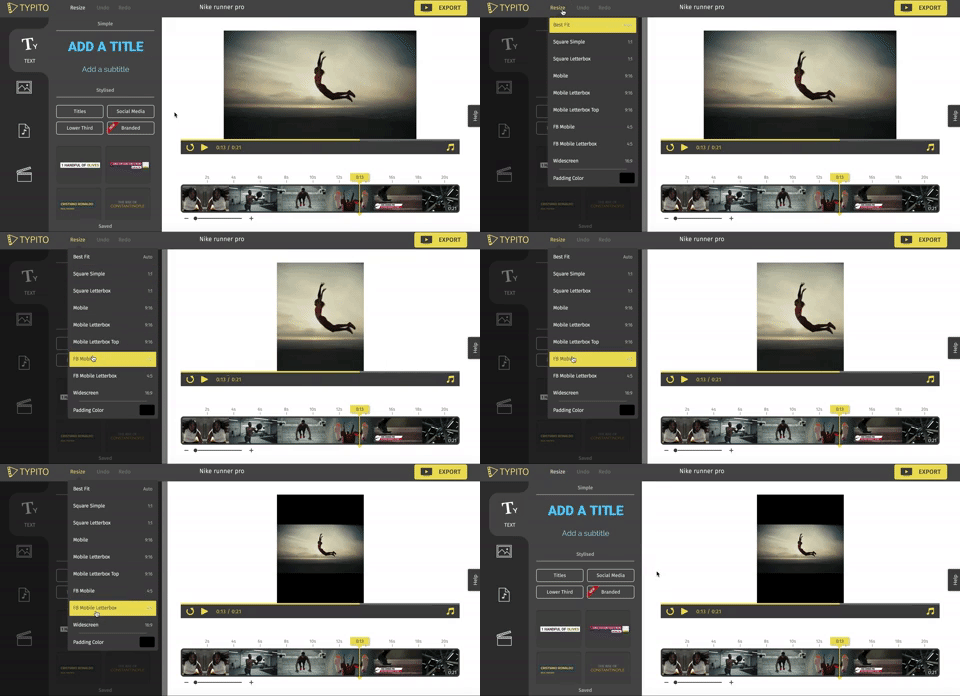
One of the most time-consuming tasks in digital editing is resizing and repositioning footage to fit various aspect ratios. Adobe Premiere’s AI-powered plugin, Auto Reframe, simplifies this process by automatically analyzing the content and intelligently reframing the footage. By leveraging AI algorithms, Auto Reframe can identify key elements within the frame and dynamically resize and reposition it to maintain visual focus. This automation saves hours of manual adjustment, allowing editors to allocate more time to creative decision-making and storytelling.

Streamlining Dialogue Search and Transcript Syncing with Avid’s AI-Based Tools:
Locating specific dialogue or syncing transcripts is another labor-intensive task in editing. Avid’s AI-based tools, such as PhraseFind and ScriptSync, provide efficient solutions to streamline these processes. PhraseFind utilizes AI algorithms to automatically detect dialogue within clips, eliminating the need for manual transcription or time-consuming manual searching. Editors can quickly search for specific dialogue or keywords, significantly reducing the time spent on content retrieval. Additionally, Avid’s ScriptSync automatically syncs transcripts with the corresponding footage, ensuring accurate alignment and simplifying the editing workflow. These AI-powered tools save valuable time and effort, enabling editors to focus on the creative aspects of their projects.

Enhancing Efficiency and Boosting Productivity:
By automating tedious tasks, AI-powered editing tools enhance efficiency and boost productivity. Editors can allocate more time and energy towards refining their creative vision, experimenting with different storytelling techniques, and achieving the desired visual impact. The automation of tasks like resizing, repositioning, and dialogue search allows professionals to work more efficiently, meeting tight deadlines without compromising on quality.

As AI technology continues to advance, the possibilities for automating tasks in digital editing are limitless, unlocking new avenues for creativity and productivity in the editing realm, ultimately revolutionizing the way professionals approach their craft.

Re-Inventing Invention: Building Success from the “Studs Up”

This article was inspired by a peer who pointed out how a huge successful company pivoted the company’s approach to the New Times and created a model for success with iterative change…..successes and failures there within.

Innovation is the lifeblood of business, and the ability to adapt and evolve is crucial for long-term success. In today’s fast-paced and ever-changing world, even previously successful businesses or ideas must be reimagined and reconstructed to meet the demands of the present. This process, often referred to as taking a business “down to the studs,” involves tearing down the existing framework and rebuilding it into what is needed to thrive in today’s competitive landscape. In this article, we will explore the concept of re-inventing invention and the steps involved in transforming a previously successful venture into a modern-day triumph.

  1. Recognizing the Need for Change:

The first step in re-inventing invention is acknowledging that change is necessary. It requires a mindset that embraces continuous improvement and a willingness to let go of outdated practices. By recognizing the need for change, business owners and entrepreneurs open themselves up to new possibilities and opportunities for growth.

  1. Evaluating the Current State:

To rebuild a business or idea, it is essential to assess its current state thoroughly. This evaluation involves analyzing every aspect of the business, including its products, services, processes, and market positioning. Identify areas that are no longer effective or relevant and determine what needs to be overhauled.

  1. Understanding the Market and Consumer Needs:

Successful re-invention relies on a deep understanding of the market and consumer needs. Conduct market research, engage with customers, and seek feedback to identify emerging trends and demands. This knowledge will guide the rebuilding process, ensuring that the reinvented business aligns with current market dynamics.

  1. Embracing Innovation and Technology:

In today’s digital age, innovation and technology play a pivotal role in re-inventing invention. Embrace emerging technologies, such as artificial intelligence, automation, or data analytics, to streamline operations and enhance efficiency. Incorporate innovative ideas into product development, customer experience, and marketing strategies to stay ahead of the competition.

  1. Building a Strong Team:

Rebuilding a business requires a strong and dedicated team. As part of the reinvention process, reevaluate the existing team and identify any skill gaps. Recruit individuals who bring fresh perspectives, diverse expertise, and a passion for change. Foster a culture that encourages collaboration, creativity, and continuous learning.

  1. Creating a Clear Vision and Strategy:

A clear vision and well-defined strategy are essential to guide the re-invention process. Define the goals and objectives of the rebuilt business, and outline a roadmap for achieving them. Communicate this vision to the team and stakeholders, ensuring everyone is aligned and committed to the transformation.

  1. Iterative Approach and Agility:

Rebuilding a business is not a one-time event but an ongoing process. Adopt an iterative approach, continuously testing and refining ideas, products, and strategies. Remain agile, ready to adapt and pivot as needed to meet evolving market demands and consumer preferences.

  1. Embracing Risk and Learning from Failure:

Re-inventing invention involves taking calculated risks and being unafraid of failure. Accept that not all ideas will succeed, but view failures as learning opportunities. Encourage a culture of experimentation and innovation, where mistakes are embraced as stepping stones to success.

Re-inventing invention is a transformative process that breathes new life into previously successful businesses or ideas. By recognizing the need for change, evaluating the current state, understanding market dynamics, embracing innovation, building a strong team, creating a clear vision, and remaining agile, businesses can rebuild themselves to thrive in today’s dynamic environment. It is through this process that they can forge a path towards long-term success and continue to push the boundaries of what is possible. Embrace the challenge of re-inventing invention, and let it be the catalyst for your business’s evolution and growth.

Enhancing Video Content with Integrated Playout Graphics (IPGs)

In broadcasting and video environments, Integrated Playout Graphics (IPGs) play a vital role in enhancing the visual appeal and interactivity of video content. These systems enable real-time graphics rendering and the seamless insertion of dynamic graphics and text overlays into live or pre-recorded video. In this article, we will explore the various aspects of IPGs and how they contribute to a captivating viewing experience.

1. Real-Time Graphics Rendering:

IPGs offer real-time graphics rendering capabilities, allowing broadcasters and content creators to generate visually engaging graphics on the fly. Whether it’s lower thirds, logos, tickers, or full-screen graphics, IPGs enable the creation and insertion of these elements in real-time, enhancing the viewer’s experience. This real-time capability is particularly valuable for live broadcasts, as it enables instant updates and changes to graphics, ensuring accurate and up-to-date information is presented to the audience.

2. Dynamic and Interactive Elements:

IPGs empower content creators to add dynamic and interactive elements to their video content. These can include animated graphics, transitions, overlays, and interactive elements like polls, social media feeds, or live data updates. By incorporating these elements, IPGs make video content more engaging, immersive, and visually appealing. This interactivity encourages viewer participation and creates a more dynamic viewing experience.

3. Seamless Integration:

IPGs seamlessly integrate with existing video workflows, making them a valuable tool for broadcasters and content producers. They can be integrated with playout servers, video switchers, automation systems, and other broadcasting equipment, allowing for efficient and streamlined operations. This integration ensures that graphics and text overlays are inserted seamlessly into the video content, without any disruption or delay. Additionally, IPGs often support industry-standard protocols, making them compatible with various video formats and delivery platforms.

4. Customization and Branding:

IPGs offer extensive customization options, allowing broadcasters to align graphics with their brand identity. From choosing fonts, colors, and layouts to incorporating logos and visual elements, IPGs provide flexibility in creating graphics that reflect the brand’s aesthetics. This customization helps in maintaining a consistent visual identity across different video content and enhances brand recognition. Content creators can also create templates and presets for graphics, making it easier to generate graphics quickly and consistently.

Integrated Playout Graphics (IPGs) play a crucial role in enhancing video content by providing real-time graphics rendering and the seamless integration of dynamic and interactive elements. With their ability to customize graphics and ensure seamless integration, IPGs contribute to a captivating and visually appealing viewing experience. As technology continues to advance, IPGs will remain an essential tool for broadcasters and content creators in delivering engaging and immersive content.

Elements of Creating an Engaging Video Insert: Preparation and Pitfalls

Video inserts have become an integral part of modern communication, whether it’s for marketing, education, or entertainment purposes. These short video segments can captivate audiences and deliver impactful messages. However, creating an effective video insert requires careful preparation and consideration of potential pitfalls. In this article, we will explore the essential elements involved in crafting a compelling video insert and discuss common challenges to avoid.

1. Define Your Objective:

Before diving into the creation process, it’s crucial to establish a clear objective for your video insert. Determine what message you want to convey, who your target audience is, and what action you want viewers to take. Having a well-defined objective will guide your creative decisions and ensure the video serves its purpose.

2. Script and Storyboard:

Prepare a compelling script that aligns with your objective. A concise and engaging script will keep viewers interested and help convey information effectively. A storyboard can further enhance the planning process by visualizing each scene, camera angles, transitions, and other visual elements. This step ensures a cohesive and well-structured video.

3. Attention-Grabbing Introduction:

To capture your audience’s attention, create a strong introduction. Start with an intriguing hook or a visually appealing shot to immediately draw viewers in. The opening seconds of a video insert are crucial, as they determine whether viewers will continue watching or move on.

4. Visual and Audio Elements:

Choose relevant visuals that support your message and enhance viewer engagement. High-quality footage, animations, graphics, and effects can elevate the production value of your video insert. Additionally, consider using background music or voiceovers to enhance the emotional impact and create a memorable experience.

5. Clear and Concise Messaging:

Keep your message clear and concise throughout the video insert. Avoid overwhelming viewers with excessive information or complex concepts. Present your content in a way that is easily understandable and digestible. Remember, simplicity often leads to better viewer retention and comprehension.

6. Branding and Call-to-Action:

Incorporate your brand elements, such as logos, colors, and taglines, into the video insert to reinforce brand recognition. Additionally, include a compelling call-to-action (CTA) that prompts viewers to take the desired next step, whether it’s visiting a website, subscribing to a channel, or making a purchase. Make the CTA clear and easily actionable.

Pitfalls to Avoid:

1. Lengthy Content: Be mindful of the video’s duration. Long videos can lose viewer interest, so keep it concise and focused.

2. Poor Audio Quality: Ensure clear audio by using quality microphones and recording in a controlled environment. Muffled or distracting audio can significantly diminish the impact of your message.

3. Lack of Visual Variety: Incorporate diverse visuals, transitions, and camera angles to maintain viewer engagement. A monotonous video can lead to viewer disinterest.

4. Overlooking Mobile Optimization: With a significant portion of viewers consuming video content on mobile devices, optimize your video insert for device platforms.

Creating an impactful video insert requires careful planning, attention to detail, and a deep understanding of your audience and objectives. By following the essential elements discussed in this article, such as defining your objective, scripting effectively, grabbing attention from the start, utilizing visual and audio elements strategically, and incorporating branding and a compelling call-to-action, you can create a video insert that resonates with viewers and achieves your desired outcomes. Remember to avoid common pitfalls by keeping the content concise, ensuring high audio quality, maintaining visual variety, optimizing for mobile viewing, and seeking feedback throughout the process. With these considerations in mind, you can confidently create engaging video inserts that leave a lasting impression on your audience and drive the desired actions. So, go forth and harness the power of video to connect, inform, and inspire.