Overview: 30 Cloud Security Companies

Cloud security is a hot topic as streaming, processing, editing in the cloud is growing at a brakefast speed, not to leave out AI learning for meta data, closed captioning, transcribing, and DAI (Dynamic Ad Insertion). Keeping information secure is essential.

Below are 30 cloud security companies and the specific services they provide:

1. Microsoft Azure: Provides cloud security services such as identity and access management, threat protection, and security management.

2. Amazon Web Services (AWS): Offers security services such as identity and access management, data protection, network security, and compliance.

3. Google Cloud Platform (GCP): Provides security services such as identity and access management, data encryption, and threat detection.

4. Palo Alto Networks: Offers cloud security services such as firewalls, intrusion detection and prevention, and threat intelligence.

5. Symantec: Provides cloud security services such as data protection, threat detection, and compliance.

6. IBM Cloud: Offers security services such as access management, data protection, and threat intelligence.

7. Cisco Cloud Security: Provides cloud security services such as firewalls, intrusion detection and prevention, and threat intelligence.

8. McAfee: Offers cloud security services such as data protection, threat detection, and compliance.

9. CrowdStrike: Provides cloud security services such as endpoint protection, threat detection, and incident response.

10. Akamai Technologies: Offers cloud security services such as web application firewall, bot management, and DDoS protection.

11. Fortinet: Provides cloud security services such as firewalls, intrusion detection and prevention, and threat intelligence.

12. Check Point Software: Offers cloud security services such as firewalls, intrusion detection and prevention, and threat intelligence.

13. Trend Micro: Provides cloud security services such as data protection, threat detection, and compliance.

14. F5 Networks: Offers cloud security services such as web application firewall, bot management, and DDoS protection.

15. Zscaler: Provides cloud security services such as web security, DNS security, and cloud firewall.

16. Cloudflare: Offers cloud security services such as DDoS protection, web application firewall, and bot management.

17. Sophos: Provides cloud security services such as endpoint protection, email security, and web security.

18. Rapid7: Offers cloud security services such as vulnerability management, threat detection, and incident response.

19. Tenable: Provides cloud security services such as vulnerability management, threat detection, and compliance.

20. Alert Logic: Offers cloud security services such as intrusion detection and prevention, log management, and compliance.

21. Qualys: Provides cloud security services such as vulnerability management, threat detection, and compliance.

22. Carbon Black: Offers cloud security services such as endpoint protection, threat detection, and incident response.

23. Netskope: Provides cloud security services such as data loss prevention, web security, and cloud access security broker.

24. Bitdefender: Offers cloud security services such as endpoint protection, email security, and cloud security.

25. Barracuda Networks: Provides cloud security services such as email security, web security, and cloud security.

26. CipherCloud: Offers cloud security services such as data protection, threat detection, and compliance.

27. FireEye: Provides cloud security services such as threat intelligence, incident response, and forensics.

28. Imperva: Offers cloud security services such as web application firewall, bot management, and DDoS protection.

29. Qualys: Provides cloud security services such as vulnerability management, threat detection, and compliance.

30. Skyhigh Networks: Offers cloud security services such as cloud access security broker, data protection, and threat detection.

Overall, these cloud security companies provide a range of cloud security services, including identity and access management, data protection, threat detection, and compliance.

Quick Comparison Guide: LTN, The Switch, AWS Elemental , Haivision, & Grabyo

Ltn and The Switch are two of the leading providers of live video transmission and broadcasting solutions, but there are also other competitors in this market. Here is a brief comparison of Ltn, The Switch, and other competitors in this space:

1. Ltn – Ltn offers a range of cloud-based video transport and managed network solutions for broadcast and live events. Ltn’s solutions support up to 4K resolution, and offer features such as low-latency transmission, bonding of multiple cellular networks, and support for a range of video formats. Ltn’s pricing model is subscription-based, with customized pricing plans based on the specific needs of the customer. Ltn also offers 24/7 support and a global network of data centers.

2. The Switch – The Switch offers a range of video transport and production solutions for broadcast and live events, including fiber-optic networks, satellite trucks, and remote production services. The Switch’s solutions support up to 4K resolution, and offer features such as low-latency transmission, bonding of multiple cellular networks, and support for a range of video formats. The Switch’s pricing model is based on usage and location, with customized pricing plans based on the specific needs of the customer. The Switch also offers 24/7 support and a global network of data centers.

3. Haivision offers a range of video transport and production solutions for broadcast and live events, including cloud-based video streaming, low-latency encoding, and remote production services.

4. AWS Elemental offers a range of cloud-based video processing and delivery solutions for broadcast and live events, including live streaming, video encoding, and content delivery.

5. Grabyo offers a cloud-based platform for live video production and distribution, with features such as live clipping, real-time graphics, and social media integration.

The choice between these companies will depend on the specific needs and requirements of the organization, as well as factors such as pricing, support, and integration with other systems. It is recommended to evaluate the features, capabilities, and pricing of each provider before making a decision.

Designing Fault-Tolerant and Highly Available Services on AWS.

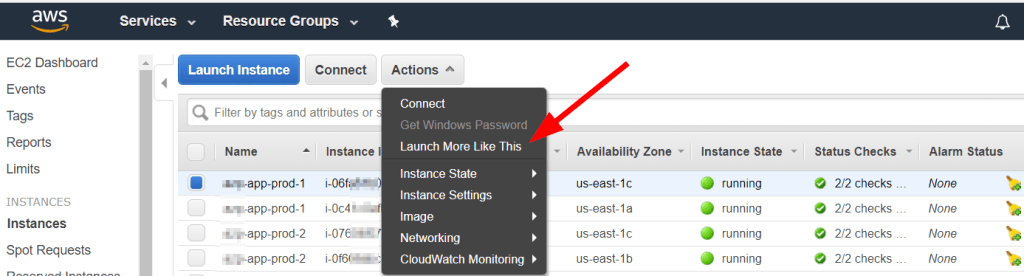
Amazon Elastic Compute Cloud (EC2) is a web-based cloud computing service provided by Amazon Web Services (AWS) that enables users to rent virtual computers on which they can run their own applications. EC2 allows users to quickly and easily provision a virtual machine (i.e., an instance) with the desired configuration, including a choice of operating system, CPU, memory, storage, and network options. 

Users can choose from a wide selection of instance types optimized for different workloads, including general-purpose, compute-optimized, memory-optimized, and storage-optimized instances. EC2 also provides other features such as Auto Scaling, which allows users to automatically adjust the number of instances based on demand, and Elastic Load Balancing, which distributes incoming traffic across multiple EC2 instances.

EC2 instances can be used for a variety of purposes, including hosting websites and web applications, running database servers, processing big data and analytics workloads, and running machine learning and AI algorithms. Users can pay for EC2 instances on a pay-as-you-go basis or opt for reserved instances to save money on long-term usage. EC2 also integrates with other AWS services, such as Amazon S3 for storage and Amazon RDS for managed databases, to provide a complete cloud computing solution.

Amazon RDS (Relational Database Service) is a managed database service provided by Amazon Web Services (AWS) that makes it easy to set up, operate, and scale a relational database in the cloud. With Amazon RDS, users can choose from several popular database engines, such as Amazon Aurora, MySQL, PostgreSQL, Oracle, and SQL Server, and run them in a fully managed environment, with automatic software patching, backup and recovery, and scaling.

Amazon RDS takes care of routine database tasks such as hardware provisioning, database setup, patching, backup, and recovery, leaving users free to focus on their core business applications. RDS also provides several scaling options, such as horizontal scaling using Read Replicas and vertical scaling using Elastic Inference, to meet the changing demands of applications.

With RDS, users can choose between several deployment options, such as single-AZ, multi-AZ, and global databases, to achieve the desired level of availability and performance for their applications. RDS also integrates with other AWS services, such as Amazon EC2, AWS Lambda, and Amazon CloudWatch, to provide a complete cloud computing solution.

By using Amazon RDS, users can achieve cost savings, higher availability, and better scalability than traditional on-premise database solutions while benefiting from the flexibility and agility of the cloud.

Note: Amazon EC2, AWS Lambda, and Amazon CloudWatch are three different services provided by Amazon Web Services (AWS) that serve different purposes:

1. Amazon EC2 is a web-based cloud computing service that allows users to rent virtual machines to run their applications. EC2 allows users to choose the configuration of their virtual machines, such as the operating system, CPU, memory, storage, and network options. Users can run a wide variety of applications on EC2, including web servers, databases, and analytics tools.

2. AWS Lambda is a serverless computing service that allows users to run code without provisioning or managing servers. With Lambda, users simply upload their code to AWS and Lambda takes care of running and scaling it in response to incoming requests. This enables users to build highly scalable, event-driven applications without worrying about managing infrastructure.

3. Amazon CloudWatch is a monitoring and management service for AWS resources. CloudWatch collects and tracks metrics, logs, and events from various AWS services, including EC2 and Lambda, and provides a unified view of the operational health of the services. CloudWatch also provides alerts and notifications based on predefined thresholds, enabling users to take corrective action proactively.

In summary, Amazon EC2 provides virtual machines for running applications, AWS Lambda provides a serverless computing environment for running code, and Amazon CloudWatch provides monitoring and management for AWS resources. While they can be used together, they serve different purposes and are designed to meet different needs.

Reach out with questions, and feel free to leave comments!

Info – Overview: Cloud Providers & What They Do

Here are some popular cloud service providers:

1. Amazon Web Services (AWS)

2. Microsoft Azure

3. Google Cloud Platform (GCP)

4. IBM Cloud

5. Oracle Cloud Infrastructure (OCI)

6. Alibaba Cloud

7. DigitalOcean

8. VMware Cloud

9. Rackspace

10. Salesforce Cloud

Here’s a brief explanation of what

each of the cloud providers do:

1. Amazon Web Services (AWS): A comprehensive cloud computing platform that provides Infrastructure as a Service (IaaS), Platform as a Service (PaaS), and Software as a Service (SaaS) offerings. AWS offers a wide range of services, including computing, storage, database, analytics, machine learning, networking, and security.

2. Microsoft Azure: A cloud computing platform that provides IaaS, PaaS, and SaaS offerings. Azure offers services for computing, storage, database, security, analytics, AI, and IoT. It also provides integration with Microsoft’s other products, such as Office 365 and Dynamics 365.

3. Google Cloud Platform (GCP): A cloud computing platform that provides IaaS, PaaS, and SaaS offerings. GCP offers services for computing, storage, database, analytics, machine learning, networking, and security. It also provides integration with Google’s other products, such as Google Workspace and Android.

4. IBM Cloud: A cloud computing platform that provides IaaS, PaaS, and SaaS offerings. IBM Cloud offers services for computing, storage, database, analytics, AI, and IoT. It also provides integration with IBM’s other products, such as Watson and Red Hat.

5. Oracle Cloud Infrastructure (OCI): A cloud computing platform that provides IaaS, PaaS, and SaaS offerings. OCI offers services for computing, storage, database, analytics, security, and application development. It also provides integration with Oracle’s other products, such as Oracle Database and Oracle Fusion Middleware.

6. Alibaba Cloud: A cloud computing platform that provides IaaS, PaaS, and SaaS offerings. Alibaba Cloud offers services for computing, storage, database, security, networking, and big data analytics. It is mainly focused on serving customers in Asia.

7. DigitalOcean: A cloud computing platform that provides IaaS offerings, particularly for developers and small businesses. It offers services for computing, storage, networking, and security, with a focus on simplicity and affordability.

8. VMware Cloud: A cloud computing platform that provides IaaS, PaaS, and SaaS offerings. VMware Cloud offers services for computing, storage, networking, security, and application development. It is particularly focused on providing hybrid cloud solutions that integrate with on-premises infrastructure.

9. Rackspace: A cloud computing platform that provides managed hosting and cloud services. Rackspace offers services for computing, storage, networking, security, and application support, with a focus on customer support and expertise.

10. Salesforce Cloud: A cloud computing platform that provides SaaS offerings focused on customer relationship management (CRM) and enterprise applications. Salesforce Cloud offers services for sales, marketing, customer service, analytics, and app development, with a focus on helping businesses grow and succeed.

Please reply and add anyone I missed.