Broadcast platforms refer to electronic communication systems that transmit audio, video, and other multimedia content to a wide audience.
Popular broadcast platforms include traditional media outlets like TV and radio networks, as well as newer digital platforms like podcast apps, social media networks, and streaming services.
Google has its own broadcast platforms, such as YouTube, Google Play Music, and Google Podcasts.
Other popular broadcast platforms include Spotify, Apple Podcasts, Netflix, Hulu, Amazon Prime Video, and Twitch.
Additionally, there are many specialized broadcast platforms catering to specific niches, such as sports, education, news, and religion. Some examples of these platforms are ESPN, TED Talks, CNN, and the Vatican News.
Broadcast Platforms
100 broadcast platforms:
1. Twitch
2. YouTube Live
3. Facebook Live
4. Twitter/Periscope
5. Instagram Live
6. LinkedIn Live
7. Microsoft Teams
8. Zoom
9. Google Meet
10. Hopin
11. Vimeo Live
12. Dacast
13. Livestream
14. StreamYard
15. Crowdcast
16. Brightcove
17. Wowza Streaming Cloud
18. IBM Cloud Video
19. JW Player
20. DaCast
21. Panopto
22. BlueJeans
23. GoToWebinar
24. WebEx
25. ON24
26. Livewire
27. Wirecast
28. Broadcaster Pro
29. OBS Studio
30. vMix
31. Streamlabs OBS
32. Restream
33. Be.Live
34. Freedocast Pro
35. Kaltura
36. Adobe Connect
37. Ustream
38. Switcher Studio
39. Simply Live
40. Cinegy Air PRO
41. Teradek VidiU GO
42. Magewell Ultra Stream
43. Open Broadcaster Software (OBS)
44. XSplit Broadcaster
45. Wirecast
46. Lightstream
47. Ecamm Live
48. VMix HD
49. OBS Ninja
50. Livestream Studio
51. Streamanager
52. Intercall
53. Livestream365
54. Muvi
55. Veeting Rooms
56. VCubeLive
57. Vidyard
58. Panopto
59. BrightTALK
60. DVEO
61. HuddleCamHD
62. iMeet
63. Kollective
64. KnowledgeVision
65. ReadyTalk
66. Sonic Foundry Mediasite
67. Spark Hire
68. Spontania
69. Strawberry Web
70. TrueConf
71. Brainshark
72. GoBrunch
73. Livestorm
74. MeetHook
75. MyOwnConference
76. Sococo
77. TokBird
78. Whereby
79. Yondo
80. Zoomino
81. Azar
82. Camfrog
83. Chatrandom
84. Holla
85. Live.me
86. LivU
87. Monkey
88. ScreenMeet
89. Shagle
90. Skyleti
91. UpLive
92. Wemeet
93. YouNow
94. Zego
95. Zinfog
96. Channelize.io
97. Diligent Boards
98. EngageBay
99. Front
100. Microsoft Stream
Note: This list is not exhaustive, and there may be other broadcast platforms available in the market. Additionally, some of these platforms are designed for very specific use-cases, such as for live streaming social media apps or video conferencing, where others are more general purpose.
Free free to add more platforms, ask question, leave a comment, and like!
Kubernetes is an open-source container orchestration platform that automates the deployment, scaling, and management of containerized applications.
Kubernetes allows developers to define how their application should be orchestrated and managed in a declarative way using YAML files. It can manage a large number of containers across multiple hosts, making it easier to deploy and scale applications.
Kubernetes provides features like load balancing, automated rollouts and rollbacks, self-healing capabilities, and application scaling. It also ensures high availability by providing features such as container health monitoring, automatic failover, and replication.
Overall, Kubernetes helps simplify the process of deploying and managing containerized applications and makes it easier to scale them to meet changing demands. It has become a popular tool for managing distributed systems and is widely used in cloud-native application development.
Recently, three new miniaturized Kubernetes (K8s) distributions have been launched to manage compact containers:
1. K3s: Lightweight Kubernetes by Rancher Labs, weighing only 40MB, providing a feasible option for resource-constrained environments.
2. MicroK8s: Ubuntu’s K8s distribution designed for IoT, Edge, and DevOps. It offers a small footprint, rapid install, and a simple operator experience.
3. K0s: A modern, production-grade Kubernetes distribution developed by Mirantis, built to work across many hardware and software environments, including ARM and x86 platforms. It claims to be the best fit for developers needing ‘all-in-a-single-binary’ Kubernetes distribution.
These miniaturized distributions have been created to cater to businesses that face challenges while dealing with complex infrastructure systems. They are compact, efficient, and easy to install, offering the benefits of K8s while overcoming its challenges.
MicroK8s is a version of Kubernetes specifically designed for IoT, Edge, and DevOps use cases. It provides a lightweight container orchestration solution ideal for resource-constrained environments by allowing users to run Kubernetes locally, on a laptop or Edge device.
IoT stands for “Internet of Things,” which refers to the interconnectivity and communication between various physical devices that are embedded with sensors, software, and other technologies. The data generated by connected devices is collected, analyzed, and used to automate processes and improve decision-making.
Edge computing is a distributed computing model that brings computation and data storage closer to the location where it is needed, which could be on sensors, gateways, or even local servers. This technology helps to reduce network latency and improve performance by processing data closer to the source.
DevOps is a set of practices that combines software development and IT operations to automate and streamline the software delivery process. It helps teams to collaborate more effectively, deliver software more frequently, and with a higher degree of reliability.
Together, IoT, Edge, and DevOps complement one another, as IoT and Edge computing generate large amounts of data that need to be processed in real-time, while DevOps provides the tools and processes needed to handle the software development, testing, deployment, and management required for these complex systems.
MicroK8s is now available as a Snap package (Snaps also a higher level of security by isolating the application from the rest of the system. This makes it easier to maintain and update Kubernetes and ensures a consistent user experience across multiple platforms).
Snap packages can be installed with a single command on supported platforms like Ubuntu, Debian, Fedora, and ArchLinux. To install MicroK8s on Ubuntu, use the following command:
After installation, you can check the status of MicroK8s with the following command:
sudo microk8s status –wait-ready
You can then begin to run Kubernetes commands as with any other Kubernetes distribution. MicroK8s can be managed through a web console or command-line interface and can deploy a wide variety of applications including web servers, databases, and microservices. MicroK8s also includes support for popular add-ons such as Istio, Knative, and Prometheus for advanced monitoring and management capabilities.
MicroK8s is a simple, fast, and lightweight Kubernetes distribution designed specifically to run on IoT, Edge, and DevOps environments, with easy installation through a single command for quick set up and use.
MicroK8s is a lightweight, easy-to-install version of Kubernetes that’s specifically designed to run on resource-constrained environments such as IoT and Edge devices. As a Snap package, MicroK8s is a self-contained, modular application that includes all the necessary components for running Kubernetes, including the Kubernetes control plane, the kubelet, and other essential Kubernetes features.
A Snap package is a self-contained application package that includes all the dependencies and runtime libraries needed to run the application on any Linux distribution that supports the Snap package system. This means that MicroK8s does not require any external dependencies or system changes to be installed, making it a quick and easy way to get Kubernetes up and running on any supported Linux platform.
Snap packages are also easy to manage and upgrade, as updates to the package and individual software components can be performed automatically with the built-in Snap package management system. This allows users to stay up-to-date with the latest versions of the software without the need for is a lightweight, easy-to-install version of Kubernetes that’s specifically designed to run on resource-constrained environments such as IoT and Edge devices. As a Snap package, MicroK8s is a self-contained, modular application that includes all the necessary components for running Kubernetes, including the Kubernetes control plane, the kubelet, and other essential Kubernetes features.
There are several PTP (Precision Time Protocol) protocols, also known as IEEE 1588. The most commonly used are:
PTPv1: The original version of the Precision Time Protocol specified in IEEE 1588-2002.
PTPv2: The updated version of PTP that is widely used today, specified in IEEE 1588-2008. It introduced several new features and improvements over the original version.
PTPv2.1: An extension to PTPv2 that provides more reliable and secure time synchronization, specified in IEEE 1588-2019.
PTPv3: A revision of PTP that is currently under development by the IEEE. It aims to further improve the protocol’s accuracy, reliability, and security.
The main differences between these protocols lie in their features and capabilities, such as the accuracy and precision of the time synchronization they provide, the types of hardware they can support, and the security mechanisms they include.
PTP can be used to distribute precise time from a GPS (Global Positioning System) satellite receiver that has a PTP-enabled network interface. This allows for accurate time synchronization across distributed systems.
GPS satellites provide accurate time information through atomic clocks that are synchronized to GPS time, which is based on International Atomic Time (TAI). The GPS receiver on the ground uses this information to determine its location, velocity, and precise timing information.
PTP-compatible GPS receivers can output PTP timestamps by converting the GPS time information into PTP format through a specialized PTP adapter or GPS receiver module that has been designed to support this function. The GPS receiver provides the PTP grandmaster clock with its original GPS time and this clock can then synchronize other PTP-compatible devices on a network.
Since GPS signals travel at the speed of light, the propagation delay between the satellites and the GPS receiver can be accurately measured and accounted for by the GPS receiver. This allows PTP-compatible GPS receivers to provide accurate timestamps that can be used for time synchronization across a network.
PTP can be used in conjunction with GPS receivers to provide accurate time synchronization, enabling organizations such as telecommunications providers and financial traders to synchronize their operations and services across distributed systems.
The Leader clock is a clock that is responsible for generating and distributing time to follower and boundary clocks in the network, while a Follower clock is a clock that is synchronized to the Leader clock.
The Leader clock sends periodic synchronization messages called Sync messages to the Follower clocks in the network, which allows the Follower clocks to establish their own clocks and set their own internal time to match that of the Leader clock. The Follower clocks periodically send messages to the Leader to estimate network delay and adjust their own clocks’ rate accordingly.
The goal of PTP is to achieve sub-microsecond accuracy in network clock synchronization, which is critical for time-sensitive applications such as financial trading, industrial control systems, and telecommunications. Leader and Follower clocks are an essential part of PTP implementation, enabling precise time synchronization across multiple edge devices in a network.
The hardware supported by each version of PTP can vary depending on the implementation, but in general:
PTPv1: This version of PTP supports Ethernet networks and devices with hardware timestamps, which were implemented in some network interface cards (NICs) and switches.
PTPv2: This version of PTP is widely used and supports Ethernet networks and devices with hardware timestamps, which are now more commonly available in NICs and switches. It also extends support to Wi-Fi networks and wireless devices.
PTPv2.1: This version of PTP builds on PTPv2 and adds new features to improve security, resiliency, and scalability. It supports the same hardware as PTPv2.
PTPv3: This version of PTP is still under development, but it aims to extend the protocol’s support to new hardware, such as low-power devices and embedded systems. It also aims to add support for more advanced timing functions, including time-sensitive networking (TSN) and coexistence with existing synchronization protocols.
I hope this helps you under PTP on a basic level. Reach out if you have any questions.
FFmpeg is a command-line based open-source multimedia framework that includes a set of tools to process, convert, combine and stream audio and video files. FFmpeg works by taking input from a file or a capture device (such as a webcam), then applying filters and encoding the data to a new format as output.
Here are some key components of how FFmpeg works:
1. Input: FFmpeg can take input from a variety of sources: video files, audio files, image sequences, capture devices, etc.
2. Decoding: Once the input source is defined, FFmpeg decodes the data from its original format (e.g., H.264 video codec) into an uncompressed, linear format, which is easier to process and manipulate.
3. Filters: FFmpeg has a vast set of filters that can be applied to the data, including scaling, cropping, color correction, noise removal, and more.
4. Encoding: After filtering, FFmpeg compresses the data back into a new format (e.g., MPEG4 video codec), using one of many built-in or external codecs. FFmpeg has support for dozens of codecs, containers, and formats.
5. Output: Finally, FFmpeg saves the newly encoded data to a file, streaming server, or other output device, typically in a format such as MP4, AVI, or FLV.
FFmpeg provides a flexible and powerful way to manipulate multimedia content on a wide range of platforms and operating systems. Its command-line interface allows for fine-grained control over every aspect of the processing pipeline, making it a popular choice for integrating into larger workflows and pipelines.
Buckle up, we’re about to dive into the world of frameworks.
In computer programming, a framework is a pre-existing software infrastructure that provides a set of guidelines, pre-made code libraries, and tools to help developers build and deploy applications more efficiently.
A framework generally consists of a collection of libraries, modules, functions, and other pre-written code that serves as a foundation upon which developers can build their applications. A framework often includes a set of conventions and best practices for developing applications in a specific programming language or domain.
The goal of a framework is to provide a standardized approach to building applications that reduces development time and minimizes the possibility of errors. Frameworks can help developers implement common features like authentication, routing, and database access more easily, allowing them to focus on the unique aspects of their application.
Different types of frameworks are available for different purposes, such as web application frameworks, mobile application frameworks, software testing frameworks, and more. Some popular examples of frameworks include Ruby on Rails, Django, Laravel, React, and Angular.
HTTP Live Streaming (HLS) is an adaptive streaming protocol developed by Apple for delivering media content over the internet. To create an HLS stream, certain audio and video formats are required for compatibility with the protocol. Here are the audio and video formats required for HLS:
1. Audio Formats: HLS requires audio to be encoded in either AAC-LC (Advanced Audio Coding Low Complexity) or MP3 (MPEG-1 Audio Layer III) format. However, AAC-LC is recommended because it provides better audio quality at lower bitrates.
2. Video Formats: HLS requires video to be encoded in either H.264 (also known as AVC, Advanced Video Coding) or HEVC (also known as H.265, High-Efficiency Video Coding) format. H.264 is the most widely used video codec for HLS, but HEVC provides better video quality at lower bitrates and is recommended for higher resolution and frame rate streams.
In addition to these audio and video formats, HLS also requires that the media files be segmented into small chunks of equal duration, typically between 2 and 10 seconds. These segments are then delivered to the client using a manifest file (usually an m3u8 file) that contains information about the segments and their URLs.
Overall, HLS is compatible with a wide range of devices and platforms, including iOS and Android devices, web browsers, and streaming media players. By following the recommended audio and video formats, it ensures that the media streams can be played seamlessly across all these platforms.
ENCODING HLS STREAMS
To encode an HLS stream, you need to follow these general steps:
1. Prepare your source media: Before encoding, you need to have your source media in a compatible format (see previous answer for required formats), and you need to segment it into small chunks of equal duration.
2. Choose an encoding software: There are several encoding software tools available such as FFmpeg, Elemental Live, Wowza Streaming Engine, and more. Choose one that fits your needs and supports HLS output.
3. Configure the encoding software: Configure the encoding software by specifying the input format, segment duration, output format (HLS), and other settings.
4. Set up a web server: Set up a web server for hosting your HLS manifest file and media segments. You can use a dedicated web server or a cloud-based one.
5. Encode the media: Use the encoding software to transcode the media into the required HLS format and segment it into small chunks. The software will create an HLS manifest file (.m3u8) that includes information about the segments and their URLs.
6. Upload the output files to the web server: After encoding, upload the manifest file and media segments to the web server.
7. Test the HLS stream: Test the HLS stream on different devices and streaming players to ensure it’s playable and doesn’t have any issues.
Overall, encoding an HLS stream requires specialized software and knowledge of encoding settings and web servers. It’s recommended to follow best practices and reference the documentation provided by your encoding software and web server provider.
How To Create an HLS Stream
To create an HLS stream, you need specialized software called an encoder, which can take your source media and transcode it into the required HLS format. There are several encoding software options available, offering various features and pricing models. Some of the popular encoding software tools for creating HLS streams include:
HLS SOFTWARE & HARDWARE
1. FFmpeg: FFmpeg is a free open-source software that can convert audio and video files into different formats, including HLS output.
2. Elemental Live: Elemental Live is a hardware and software solution that supports real-time video transcoding and streaming with features like ad insertion, scalable live streaming, and more.
3. Wowza Streaming Engine: Wowza is a software-based media server that provides live and on-demand streaming with features like transcoding, live stream recording, and more.
4. Adobe Media Encoder: Adobe Media Encoder is a media processing software that can ingest and output audio and video files in different formats, including HLS.
5. Telestream Vantage: Telestream Vantage is a transcoding software that provides multiplatform content creation and delivery, including support for HLS output.
These tools can help you transcode and segment your media files into the required HLS format and generate the necessary HLS manifest file (.m3u8) that contains information about the segments and their URLs. However, the specific software you choose may depend on your budget, workflow, and other requirements, so it’s important to research and evaluate your options carefully.
HLS SYNTAX
Here are ten examples of the correct syntax for an HLS stream using M3U8 playlist format:
1. #EXTM3U – declares the file as an M3U8 playlist file.
2. #EXT-X-VERSION:3 – specifies the version of the HLS protocol used.
3. #EXT-X-TARGETDURATION:10 – sets the maximum duration of each segment to 10 seconds.
4. #EXT-X-MEDIA-SEQUENCE:0 – indicates the starting number of media segments.
5. #EXT-X-PLAYLIST-TYPE:VOD – specifies that the playlist represents a video-on-demand stream.
6. #EXT-X-ALLOW-CACHE:YES – allows the client to cache the media segments.
7. #EXT-X-DISCONTINUITY – indicates a discontinuity in the media stream, such as a change from one bitrate to another.
8. #EXT-X-STREAM-INF:BANDWIDTH=2000000 – specifies the bitrate and resolution of the video stream.
9. #EXT-X-ENDLIST – indicates that no more segments will be added to the playlist (for live streams, this should be omitted)
10. #EXT-X-MAP:URI=”init.mp4″ – specifies a separate initialization segment for the media stream.
Note that some of these tags are optional, and the syntax may vary depending on the media server and player used. It’s always a good idea to test your playlist with different players and devices to make sure it works well.
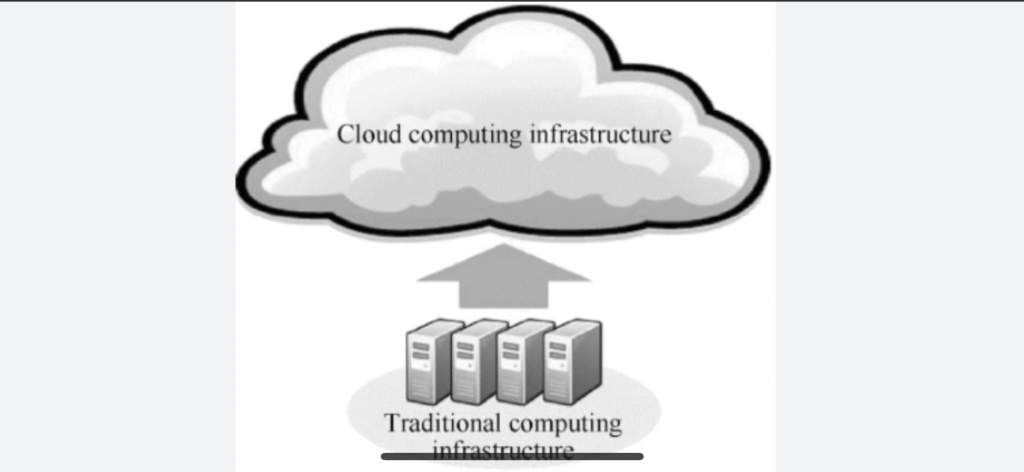
SaaS (Software as a Service) is a cloud computing model where software is provided as a service over the internet, without the need for the user to install or manage the software themselves. With SaaS, users can access software applications through a web browser or mobile app, and the provider takes care of the infrastructure, maintenance, and security of the software.
When using a SaaS application, the user typically pays a subscription fee on a monthly or annual basis. The provider hosts the software on their servers and manages the infrastructure, storage, and security. The user can access the application from anywhere with an internet connection, and can use the application on a pay-as-you-go basis.
VMware is a company that provides virtualization software and cloud computing services. VMware’s flagship product is vSphere, a virtualization platform that allows businesses to manage their data center infrastructure more efficiently by virtualizing their physical servers and creating virtual machines (VMs). VMware also provides cloud computing services through its VMware Cloud platform, which allows businesses to run their applications in the cloud, either on their own infrastructure or in public clouds like Amazon Web Services (AWS) or Microsoft Azure. VMware’s offerings include Infrastructure as a Service (IaaS), Platform as a Service (PaaS), and Software as a Service (SaaS) solutions.
Infrastructure as a Service (IaaS) is a cloud computing model where a provider offers virtualized computing resources, such as servers, storage, and networking, over the internet. With IaaS, a user can rent these resources on a pay-per-use basis and can scale up or down as needed without having to manage the underlying infrastructure. Examples of IaaS providers include Amazon Web Services (AWS), Microsoft Azure, and Google Cloud Platform.
Platform as a Service (PaaS) is a cloud computing model where a provider offers a platform for developing, deploying, and managing applications over the internet. With PaaS, a user can develop and deploy applications without having to manage the underlying infrastructure, which includes servers, storage, and networking. The PaaS provider takes care of these tasks, allowing the user to focus on developing and deploying their application. Examples of PaaS providers include Heroku, Google App Engine, and Microsoft Azure.
Software as a Service (SaaS) is a cloud computing model where an application is provided as a service over the internet. With SaaS, a user can access the application through a web browser or mobile app, without having to install or manage the software themselves. The application is hosted on the provider’s servers, and the provider takes care of maintenance, updates, and security. The user typically pays a subscription fee on a monthly or annual basis. Examples of SaaS applications include Google Workspace, Microsoft Office 365, and Salesforce.
DevOps is a software development approach that emphasizes collaboration, communication, and integration between software developers and operations teams to deliver high-quality software applications. The following is a step-by-step breakdown of the DevOps process:
1. Planning: The first stage of the DevOps process is planning. This involves defining the project requirements, establishing goals, and creating a timeline for the project.
2. Development: In the second stage, the application is developed by a team of software developers using an agile development approach. The code is stored in a version control system and automated builds are triggered when changes are made.
3. Testing: Once the application is developed, it is thoroughly tested to ensure it meets the requirements and is free of bugs. Testing is automated as much as possible, and any issues found are immediately reported to the developers for fixing.
4. Deployment: In the deployment stage, the application is packaged into a container or executable and deployed to the testing and production environments. Deployment is automated to minimize the risk of errors and improve the speed of the release cycle.
5. Monitoring: Once the application is deployed, it is constantly monitored to ensure it is performing optimally and any issues are promptly identified and resolved. This includes monitoring the infrastructure, the application, and customer feedback.
6. Feedback: Finally, feedback is gathered from users and stakeholders, and the results are used to inform future development projects. The feedback is collected continuously throughout the DevOps process, allowing the team to make informed decisions and continuously improve the application.
1. Amazon Web Services (AWS): A comprehensive cloud computing platform that provides Infrastructure as a Service (IaaS), Platform as a Service (PaaS), and Software as a Service (SaaS) offerings. AWS offers a wide range of services, including computing, storage, database, analytics, machine learning, networking, and security.
2. Microsoft Azure: A cloud computing platform that provides IaaS, PaaS, and SaaS offerings. Azure offers services for computing, storage, database, security, analytics, AI, and IoT. It also provides integration with Microsoft’s other products, such as Office 365 and Dynamics 365.
3. Google Cloud Platform (GCP): A cloud computing platform that provides IaaS, PaaS, and SaaS offerings. GCP offers services for computing, storage, database, analytics, machine learning, networking, and security. It also provides integration with Google’s other products, such as Google Workspace and Android.
4. IBM Cloud: A cloud computing platform that provides IaaS, PaaS, and SaaS offerings. IBM Cloud offers services for computing, storage, database, analytics, AI, and IoT. It also provides integration with IBM’s other products, such as Watson and Red Hat.
5. Oracle Cloud Infrastructure (OCI): A cloud computing platform that provides IaaS, PaaS, and SaaS offerings. OCI offers services for computing, storage, database, analytics, security, and application development. It also provides integration with Oracle’s other products, such as Oracle Database and Oracle Fusion Middleware.
6. Alibaba Cloud: A cloud computing platform that provides IaaS, PaaS, and SaaS offerings. Alibaba Cloud offers services for computing, storage, database, security, networking, and big data analytics. It is mainly focused on serving customers in Asia.
7. DigitalOcean: A cloud computing platform that provides IaaS offerings, particularly for developers and small businesses. It offers services for computing, storage, networking, and security, with a focus on simplicity and affordability.
8. VMware Cloud: A cloud computing platform that provides IaaS, PaaS, and SaaS offerings. VMware Cloud offers services for computing, storage, networking, security, and application development. It is particularly focused on providing hybrid cloud solutions that integrate with on-premises infrastructure.
9. Rackspace: A cloud computing platform that provides managed hosting and cloud services. Rackspace offers services for computing, storage, networking, security, and application support, with a focus on customer support and expertise.
10. Salesforce Cloud: A cloud computing platform that provides SaaS offerings focused on customer relationship management (CRM) and enterprise applications. Salesforce Cloud offers services for sales, marketing, customer service, analytics, and app development, with a focus on helping businesses grow and succeed.
If you’re like me, you beat yourself up for every mid-step, mistake you make, big or small. I played softball yesterday and made a ton of good plays, ran for first to be safe like a jet, scored at home plate twice by out running the throw, but also was thrown out once at second base, bobbled a ground ball and didn’t get the runner. I remember the mistakes more than the good stuff.
The same goes for my golf game. I hit the ball straight most of the time, but a lot of the time I don’t hit it very far, or get “air” on it. The ball rolls down the fairway pretty far at least and is competitive. But, if I’m swinging over water I choke. If I swing out of a bunker or high grass, I chip like a champ. My tee shot is terrible, my short game is awesome. I love chipping and putting. I practice driving on the range into the water, and I hit equally good and bad shots. Putting and chipping, I’d say I do what I want to do and am successful 90% of the time.
On the driving range
What do I remember most? The misses. It’s time to change that. Especially after all my lofty (pun intended) plans in January. They weren’t resolutions, they were plans.
I also wanted to write everyday. I’ve written some, so I’ve attained that. But, I haven’t written everyday and posted it like I planned to.
I wanted to improve my running time, I hurt my ankle and had to take downtime, so now I started over again last week – slowly.
The Swimming – ankle support
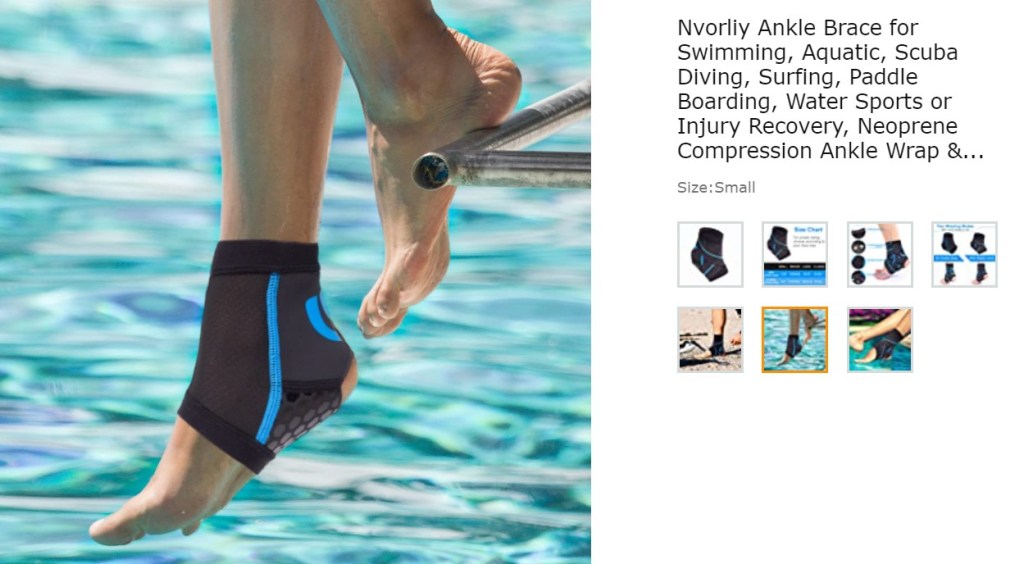
I swim, I’m trying to improve my lap time, but my ankle kept torquing there too, I had to get a swim ankle brace, but I’ve been able to swim regularly again now, and my lap time has improved, and I now do over a mile 5-6 days a week. Days that I feel tired, I have a slower lap time, I beat myself up for going so slow all the way home, but try to shake it off while making dinner.
At work, I can do every right. Cross all I need off my list, and I feel accomplished. Then I realize I forget to get an essential ingredient(s) for dinner at the store. What do you think I think of? Not the accomplishments, but then I pivot on the dinner, and make something else, most of the time it turns out better than I thought it would.
Improvising works!
So, my point it, it’s time to reset. Reset your thinking if you’re like me. Remember the good, the great, the lucky break even. Yes, I’d rather be great or even good than lucky, but I’ll take the luck, any day.
We all need some encouragement sometimes, so hopefully this has helped someone recalibrate their mindset to remember the good or great things you’ve done and accomplished up to now. And, if you’ve taken mid-steps or not even started your plans for 2023, reset now.
There are 24 hours in a day. You can restart your 24 hours at any time, whether it’s 10am, 2pm, or Midnight. It’s YOUR 24 hours. Let go of any regret of not even starting what you set out to do – YET. You can start your 24 hours now, or anytime you choose.
Love Yourself First, the rest Will come. Act and think like “it’s on its way”, and it will come. You need to think that it’s coming first, then it will. Be patient, be persistent, be courageous, be humble, be grateful.
Love yourself like you’re the last YOU on earth, because you are.
I’ve learned to Face Everything And Recover (facing one’s fears)
When I was young we had a couple of golf irons (I just called them clubs back then) among a garage bin-full of other sporting equipment. One day my brother and sisters decided to try “golfing” in our front yard for the first time.
I couldn’t tell you the brand of the 2-3 irons, or the golf balls we had acquired from a garage sale, but since it was something we were “trying out” for fun, they did the job for a group of kids ages 7-19 years old just trying something out.
Our corner property was long and large enough to play many sports on. We didn’t have an actual hole or pin, just a target we competed to get within range of. We did this with many activities and sports, it was a lot of fun.
At 7 years old (I was the youngest), I didn’t know anything about golf, but I had watched Wide World of Sports on TV, so I tried to emulate what I saw. Big swing, aim for the ball, and off it went – in at least the smallest of coincidences – it did so in the right direction. But, not for everyone in the group of course.
Here’s where a massive problem arose. It was my third turn up to swing (we started each “round” in order of oldest to youngest at the same place in the yard from the target at the end of the property). I blithely set-up the ball and positioned the shared club (fearless, and unaware at that time). Started on my BIG back-swing. Aaaaaand Whammm – my sister was sneaking up behind me to break my concentration. She succeeded. Aaaaaaand, I accidentally hit her hard with the club just above her left eyebrow. It was a gash, (lucky it wasn’t her eye), but with that back swing, I had given her not just a welt, but a bloody gash, aaaand turns out – a concussion.
She was rushed to the hospital. It took decades for the guilt to go away, and seeing the scar to this day, brings the whole episode to the forefront of my memory. Yes, I do realize that it wasn’t my fault, but I was involved, I was holding the club, I still hold myself responsible even though ultimately my sister was and is ok.
But, I was so traumatized, I didn’t pick up a golf club again until last year. I still to this day look around me before ever thinking of striking a ball (whether a softball, or golf ball, a good idea no matter what).
Later in life, I worked at ABC’s Wide World of Sports – in fact I told my mom earlier that same summer when I was 7, yes 7 that I was going to “work there someday”, and I did. Out of the mouths of children comes truth. I didn’t know what that meant at the time, luckily I do now.
I never was told that was a big dream back then, I wasn’t told it wouldn’t be attainable, I just received the gift reply of “ok honey”. My parents had no idea what it meant either, so there was no reason to not believe it was true.
I worked on many different sporting events including golf – I studied the players for each event I worked so I could recognize them if and when needed. From Golf, College & Monday Night Football, Horse Racing, Auto Racing, Bowling, Ice Skating, and Gymnastics. It was a great time. Thing is, I worked out all the, but stopped playing sports. I didn’t really even realize that until right this moment when I wrote that.
I played sports, did running events, did gymnastics, and dance class in grade & middle school, then went to performing arts high school for dance, but with that stopped “competitive sports”.
After college, I took to physical volunteering for different causes: cycling events, running events, swimming events, then began triathlons, just last year I participated in tough mudders too (and I love doing all of them).
Last year I started playing softball again. I’m relearning everything, I also have set aside my predisposition regarding golf, have taken lessons, and love the entire process. I regret not getting out of my own way mentally about the game. I’m still cognizant of my surroundings, where people, animals, and things are in relation to what I’m doing, not just in golf, but in life as well.
My Personal Take Away:
It’s wise to always know my surroundings, the fear has left, but the good practice of ensuring my and others safety prior to taking any swing (in sports, personally, and business opportunity), is just good sense. Don’t let fear stop you, let it inform you to be careful, but not hinder you action.
You’ve worked and worked. Shown up, gone above and beyond at work, with friends and family too. You’ve volunteered for the food bank, and local toy drive, helped neighbors with packages, and driven them to appointments they forgot about, and they didn’t want to take a car service.
You’ve gone to holiday gatherings for over a month for work and with friends. You’ve networked with your business contacts, sent notes, emails, well wishes done everything possible to bring good will to others.
Work is great, your friends and family are great, you’ve taken care of your significant other. Now what ?
It’s YOU time, that’s what!
Don’t forget about Yourself. I learned 12 years ago (on my yoga mat) that taking time for yourself is Not selfish, it’s actually one of many self-less things you can do for yourself and others. Ummm hmhmmm – it’s true.
Say what now?
Take one hour for yourself Today in anyway you’d like. A walk, meditate, if you want movement involved – work out (today I worked out, then did yoga, later I’ll play a little golf), listen to music, take a bath, swim, read, write, play an instrument, play /practice a sport, but do it. Yes Today!
You should set aside time everyday for yourself. It doesn’t always need to be an hour, just set aside some “boundary time” (time you will not be disturbed). No kids, no family, no friends, no texting, no social media – just where you’re doing You, unplugged to reset. No bills, no cooking, no cleaning, no kids (even for 5 minutes), breathe…..
This brings you back to you, the best version of you gets to emerge from this practice because not only your wants are met, an intrinsic Need of Re-connecting with yourself occurs.
You don’t know what to pick? It doesn’t HAVE to be any one thing. Pick one thing a day to try. Try something new. I chose yoga, it was the single greatest thing I did, because I didn’t even know at that moment how much I needed it yet. I just wanted to get out of the house, be with people – and try a class at my new gym. This year, learning golf and its process has me in the same zone. It’s amazing.
After the new year I’m taking a 4 day completely unplugged break. No phone, no email, no phone calls (except for emergencies only). I haven’t had a break since COVID began. Working and living at home has crossed some serious time boundaries, every day seemed to run into the next until I set some boundaries.
Exception: In an emergency, “me” time can be interrupted – but the house better be on fire! Ok, maybe not literally on fire, but I think I’ve made my point.
And, if I haven’t made my point. My point is take a break before you do!
Everyone needs even a quick reset, make it a 5 minute a day practice to start (and build from there), I guarantee others will see a positive change in you before you do. You’ll be healthier and much happier.
You’re worth it, believe it, own it, be it. You have permission to just think of yourself for at least 5 minutes a day – for the rest of your life. Then, you can return to your job, following up on tasks, the carpool, doing the dishes, grocery shopping, cleaning up after your pets and loved ones.
This is not a New Year’s resolution. Leave all your worries and things to do outside a virtual or physical door. When I step onto my yoga mat or write, nothing else exists at that moment in time. I can compartmentalize with such focus that nothing else exists, it’s almost like being in a trance. There are hours I’ve easily written through, and stepped onto my yoga mat hundreds of times, hearing just the voice of the instructor, going through the entire class, moving through each Asana, and found myself at the end not even realizing that someone else was in the room with me. It’s transcendent. It’s transformative.
It’s what I didn’t even know that I needed. Permission. Permission to think of just that for that moment in time.
You have permission to break from the task filled universe and be selfish for yourself, then you can be of service and more of yourself with the world.
















 That's News To Me