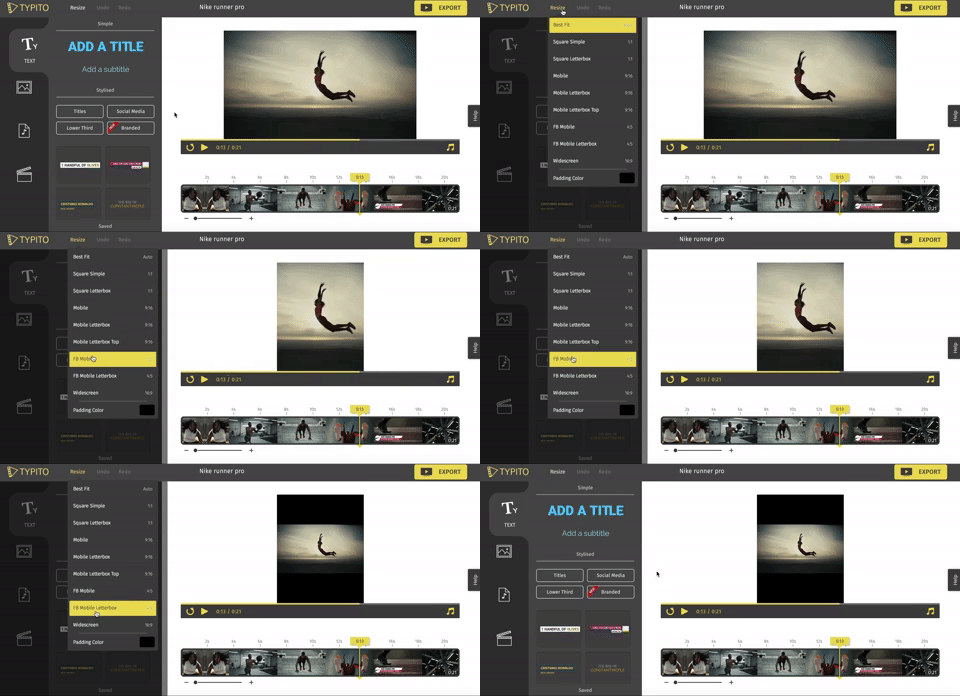
Mogrts What About Mogrts ?? What the #%€! Are They?

Exploring Mogrts: A Comprehensive Guide to Creation, Usage, and Naming Conventions

Mogrts, short for Motion Graphics Templates, have revolutionized the way multimedia content is created and utilized. These pre-designed, customizable templates streamline the process of creating visually stunning motion graphics, making them popular across various industries. In this article, we’ll delve into what Mogrts are, their applications, naming conventions, how to create them, and the process from start to finish.

What are Mogrts?
Mogrts are pre-designed motion graphics templates created using software like Adobe After Effects or Premiere Pro. They contain animated elements, such as text, shapes, transitions, and effects, that users can customize to fit their specific needs. Mogrts offer a time-efficient solution for creating professional-looking graphics without extensive design skills.

Usage and Applications:
Mogrts find applications in a wide range of scenarios, including:

  1. Video Productions: Mogrts enable video editors to easily add visually appealing graphics, lower-thirds, titles, and transitions to their videos.
  2. Social Media Content: Mogrts can be used to create eye-catching animations for social media platforms, enhancing brand presence and engagement.
  3. Presentations: Mogrts help create dynamic slide transitions and animated elements for presentations, making them more engaging and memorable.
  4. Broadcast Design: Mogrts are extensively used in TV broadcasts to incorporate dynamic graphics, lower-thirds, and overlays seamlessly.

Naming Conventions:
To maintain organization and facilitate easy retrieval, adhering to consistent naming conventions for Mogrts is crucial. Consider including relevant information in the file name, such as the template’s purpose, style, version, and resolution.

Creating Mogrts:
To create Mogrts, follow these steps:

  1. Design in Motion Graphics Software: Use motion graphics software like Adobe After Effects or Premiere Pro to design your animated elements. Ensure the composition is set up correctly, with all necessary layers organized and labeled.
  2. Essential Parameters: Identify the customizable parameters within your design that users may want to modify, such as text, colors, or timing. Make these parameters easily accessible for customization.
  3. Export as Mogrt: Export your composition as a Mogrt file, specifying the compatible software versions and any required plug-ins. Include a preview thumbnail and a brief description to provide users with an overview of the template.

The Process from Start to Finish:

  1. Conceptualize and Design: Brainstorm ideas and design your motion graphics template in motion graphics software.
  2. Customization Options: Identify and define the parameters that users can modify within the template to suit their specific needs.
  3. Export as Mogrt: Export the template as a Mogrt file, ensuring compatibility and including a preview thumbnail and description.
  4. Distribution and Usage: Share the Mogrt file with intended users through various platforms, such as online marketplaces, cloud storage, or direct distribution.
  5. Customization by Users: Users import the Mogrt file into their chosen editing software and customize the parameters to match their content.
  6. Integration into Projects: Users incorporate the customized Mogrt into their projects, leveraging its animated elements seamlessly.
  7. Iteration and Updates: Continuously refine and update your Mogrts based on user feedback, emerging trends, or new software capabilities.

Mogrts offer a convenient, time-saving solution for incorporating visually stunning motion graphics into various multimedia projects. By adhering to consistent naming conventions, creating customizable templates, and following a structured process, you can create and utilize Mogrts effectively, enhancing your creative workflows and producing captivating visual content.

AI Revolutionizing Database Organization: Streamlining Efficiency and Enhancing Accessibility

In today’s data-driven world, the efficient organization and management of databases are crucial for businesses to stay competitive. With the advent of artificial intelligence (AI), database organization has undergone a transformative evolution. This article explores how AI is revolutionizing the way databases are structured, optimized, and accessed, resulting in streamlined efficiency and enhanced accessibility for businesses of all sizes.

  1. Intelligent Data Categorization:
    AI algorithms have the ability to analyze vast amounts of unstructured data and automatically categorize it into relevant groups. By leveraging machine learning techniques, AI can identify patterns, keywords, and relationships within the data, facilitating accurate and efficient categorization. This intelligent data categorization ensures that information is organized in a manner that is easily searchable and accessible, making it simpler for businesses to retrieve specific data points quickly.
  2. Automated Data Entry and Validation:
    AI-powered tools offer automated data entry and validation, eliminating the need for manual data entry, which is often prone to errors and can be time-consuming. Using optical character recognition (OCR) technology, AI systems can extract data from various sources, such as paper documents or digital files, and populate the database automatically. Furthermore, AI algorithms can cross-reference and validate the accuracy of the entered data, ensuring a high level of data integrity and reducing the risk of human error.
  3. Predictive Analytics and Data Optimization:
    AI’s predictive analytics capabilities are instrumental in optimizing database performance. By analyzing historical data patterns, AI algorithms can predict future trends, identify potential issues, and optimize database operations accordingly. This enables businesses to proactively address challenges, allocate resources efficiently, and enhance overall system performance. AI-powered data optimization ensures that the database operates at its full potential, resulting in faster data retrieval, improved decision-making, and increased operational efficiency.
  4. Natural Language Processing for Advanced Search:
    AI’s natural language processing (NLP) capabilities have revolutionized the way databases are searched. With NLP, users can interact with the database using everyday language, making it more accessible to individuals without technical expertise. AI-powered search engines can understand user queries, interpret their intent, and retrieve the most relevant information, even from unstructured data sources. This advanced search functionality simplifies the process of retrieving specific data points, empowering businesses to make informed decisions based on comprehensive and readily accessible information.
  5. Enhanced Security and Data Privacy:
    AI plays a significant role in improving database security and protecting sensitive information. AI algorithms can detect anomalies and patterns indicative of potential security breaches, enabling proactive measures to mitigate risks. Additionally, AI-powered systems can encrypt and anonymize data, ensuring compliance with data privacy regulations and safeguarding sensitive information from unauthorized access. The integration of AI in database organization strengthens security measures and enhances data privacy, instilling confidence in businesses and their customers.

The integration of AI in database organization has revolutionized how businesses manage, access, and leverage their data. From intelligent categorization to automated data entry, predictive analytics, advanced search capabilities, and enhanced security measures, AI offers a range of benefits that streamline efficiency and enhance accessibility. As AI technology continues to evolve, businesses of all sizes can expect further advancements in database organization, enabling them to unlock the true value of their data and gain a competitive edge in the data-driven era.

The TikTok Model: Transforming Media Agility

TikTok has revolutionized the media landscape, reshaping the way content is created, consumed, and shared. This article delves into the importance of the TikTok model and its transformative impact on media agility. We will explore how TikTok’s unique features, algorithm-driven content discovery, and user-centric approach have disrupted traditional media norms, fostering adaptability, creativity, and audience engagement.

1. Breaking Traditional Boundaries:

TikTok’s model challenges the traditional media paradigm by democratizing content creation and consumption. Unlike traditional media outlets, which often require significant resources and expertise, TikTok empowers anyone with a smartphone to become a content creator. This accessibility breaks down barriers, allowing individuals from diverse backgrounds to engage in creative expression and contribute to the media landscape.

2. Algorithm-Driven Content Discovery:

TikTok’s algorithm plays a pivotal role in transforming media agility. By analyzing user preferences, behavior, and interactions, the algorithm curates personalized content feeds. This personalized approach ensures that users are exposed to content tailored to their interests, fostering engagement and keeping them hooked. The algorithm’s ability to adapt and surface trending content in real-time enhances media agility, enabling rapid dissemination of viral trends and challenges.

3. Short-Form, Bite-Sized Entertainment:

TikTok’s emphasis on short-form content has redefined the way we consume media. With attention spans dwindling, the platform’s bite-sized videos cater to the need for quick, entertaining experiences. This shift towards concise and engaging content aligns with the changing media consumption patterns, allowing users to efficiently access and enjoy content on the go. The TikTok model’s focus on brevity and entertainment value reflects the demand for agile, easily consumable media experiences.

4. Embracing Creative Freedom:

The TikTok model encourages creative freedom and experimentation. Its intuitive video editing tools, effects, filters, and sound libraries empower users to explore their artistic potential and push creative boundaries. This freedom to innovate without the constraints of traditional media formats fosters agility and adaptability, allowing creators to respond rapidly to emerging trends and engage with their audiences in fresh and exciting ways.

5. Engaging and Participatory Community: 

One of the key aspects that sets TikTok apart is its emphasis on community building and fostering active participation. Unlike traditional media, which often presents content as a one-way communication, TikTok encourages users to engage, interact, and collaborate with one another. Through features such as comments, likes, shares, and duets, TikTok creates a vibrant and connected community where users can express their thoughts, share feedback, and build relationships.

The interactive nature of TikTok’s community transforms content consumption into a shared experience. Users can engage in conversations, offer support, and provide valuable insights, creating a sense of belonging and connection. By actively participating in the community, users become co-creators, shaping trends, and influencing the direction of content. This participatory approach not only empowers users but also fosters a greater sense of ownership and investment in the content they consume and create.

Additionally, TikTok’s community-driven features, such as challenges and collaborative videos, further enhance engagement. Challenges inspire users to create their own unique interpretations of a specific theme or concept, sparking creativity and encouraging friendly competition. Collaborative videos enable users to collaborate with others, fostering connections and expanding their reach within the community. These interactive features create a dynamic ecosystem where content is continuously evolving and evolving.

TikTok’s emphasis on community engagement also extends beyond individual users. Brands, organizations, and influencers actively participate in the platform, leveraging its reach and engagement to connect with their target audiences. This symbiotic relationship between creators, users, and brands drives innovation, sparks trends, and amplifies the impact of content.

TikTok’s engaging and participatory community has transformed the way we interact with media. By promoting active engagement, fostering collaboration, and providing opportunities for users to express themselves, TikTok has created a dynamic and inclusive environment. The platform’s community-driven approach has not only revolutionized content consumption but has also empowered users to become active participants in shaping the media landscape. As TikTok continues to evolve, its community-oriented model will continue to play a vital role in driving media agility and shaping the future of content creation and engagement.

Streamlining Workflow: How AI Enhancements Empower Editors in Adobe and Avid

In the fast-paced world of digital editing, efficiency is key. The integration of artificial intelligence (AI) has revolutionized the editing landscape, offering intelligent recommendations and automated features that streamline workflows. This article highlights how AI-based technologies, such as Adobe Sensei and Avid’s AI-driven features, empower editors to work more efficiently, make faster editing decisions, and meet tight deadlines with ease.

Automated Scene Detection with Adobe Sensei:
Adobe Sensei, the AI framework behind Adobe’s creative suite, brings forth a range of time-saving features designed to streamline the editing process. One such feature is automated scene detection. By analyzing cuts and transitions in footage, AI algorithms can identify and separate individual scenes automatically. This eliminates the need for manual scene identification, enabling editors to make faster editing decisions and focus on the creative aspects of their projects. With automated scene detection, editors can efficiently navigate through footage and accelerate the editing workflow.

AI-Driven Dialogue Detection in Avid:
Avid, a leading editing software, incorporates AI-driven features that enhance efficiency and simplify content location. Media Composer’s PhraseFind is a prime example of this. Powered by AI, it automatically detects dialogue within clips. This capability eliminates the need for manual transcription or time-consuming manual searching for specific dialogue. Editors can swiftly locate and extract the desired content, saving valuable time and effort. With AI-driven dialogue detection, Avid empowers editors to efficiently manage and access specific content, ensuring a seamless editing workflow.

Efficiency Boosts and Meeting Tight Deadlines:
The integration of AI into editing workflows brings significant efficiency boosts, helping editors meet tight deadlines without compromising on quality. AI-based technologies offer intelligent recommendations that can speed up the decision-making process. For instance, Adobe Sensei’s automated content analysis can suggest suitable edits, cuts, or effects based on the footage’s content. This assists editors in quickly making informed choices, reducing the time spent on manual evaluation and trial-and-error approaches.

Additionally, AI-driven features ensure efficient content organization, making it easier to locate and retrieve specific assets. Avid’s AI algorithms analyze and tag content, allowing editors to find relevant assets swiftly through MediaCentral | Editorial Management. By eliminating the laborious task of manually searching through vast media libraries, AI enhancements enable editors to work more productively and effectively.

The integration of AI-based technologies in editing software like Adobe Premiere and Avid has revolutionized the editing workflow. Through automated scene detection, Adobe Sensei empowers editors to make faster editing decisions by automatically identifying cuts and transitions in footage. Avid’s AI-driven features, such as PhraseFind, simplify content location by automatically detecting dialogue within clips. These AI enhancements not only streamline the editing process but also enable editors to work more efficiently and meet tight deadlines. By harnessing the power of AI, editors can maximize their productivity, focus on creativity, and deliver high-quality content in a timely manner.

The Why: Tik-Tok Goes the Clock: The Importance of TikTok’s Emergence

In the vast landscape of social media platforms, TikTok has emerged as a powerful force, captivating millions of users worldwide. With its short-form videos and creative content, TikTok has revolutionized the way we consume and create entertainment. In this article, we will explore the importance of TikTok’s emergence, highlighting its impact on culture, creativity, community building, and its ability to provide a platform for expression and discovery.

1. Cultural Influence and Trends:
TikTok has become a cultural phenomenon, shaping trends and influencing popular culture. From viral dances and challenges to meme-worthy moments, the platform has the ability to catapult individuals, ideas, and songs into the mainstream. It has become a breeding ground for creativity, fostering a collective experience that transcends borders and connects people from diverse backgrounds.

2. Amplifying Creativity and Expression:
TikTok empowers users to express themselves in unique and creative ways. Its easy-to-use features, filters, and effects allow anyone, regardless of their background or expertise, to become a content creator. From comedy sketches and lip-syncing performances to DIY hacks and educational videos, TikTok has given rise to a new generation of creators who can showcase their skills, talents, and passions to a global audience.

3. Fostering Community and Connection:
TikTok has created a sense of community and belonging among its users. Through hashtags, challenges, and collaborations, individuals can find like-minded creators and engage in shared interests. The platform has also become a source of support and inspiration, with users using it to raise awareness about important social issues, mental health, and activism. It has provided a space for marginalized voices to be heard and for communities to come together.

4. Discovering New Talent and Opportunities:
TikTok has become a launchpad for discovering new talent and opportunities. The platform has propelled unknown individuals into the spotlight, giving rise to viral sensations, influencers, and even career opportunities. From musicians and comedians to artists and entrepreneurs, TikTok has become a platform where talent can be recognized, appreciated, and cultivated.

5. Embracing Bite-sized Entertainment:
In a fast-paced world where attention spans are shrinking, TikTok offers bite-sized entertainment that resonates with users. Its short-form videos provide quick bursts of amusement, making it ideal for those seeking a quick escape or a moment of laughter. TikTok’s unique format has challenged traditional content consumption patterns and has paved the way for new forms of storytelling.

TikTok’s emergence has brought a refreshing wave of creativity, community engagement, and cultural influence to the world of social media. Its ability to amplify creativity, foster connection, and provide a platform for expression and discovery has made it an important player in the digital landscape. As TikTok continues to evolve and shape the way we engage with content, it is clear that its influence will continue to grow, inspiring a new generation of creators and redefining the boundaries of digital entertainment.

Automating Tedious Tasks in Digital Editing: Unleashing Creativity with AI

Digital editing is a complex process that often involves repetitive and time-consuming tasks, which can impede the creative flow of editors. However, the integration of artificial intelligence (AI) technology has revolutionized the editing landscape, automating tedious tasks and allowing editors to focus more on their creative vision. This article explores how AI-powered tools, such as Adobe Premiere’s Auto Reframe and Avid’s PhraseFind and ScriptSync, streamline the editing process, saving time and effort while enhancing productivity and creativity.

Automated Resizing and Repositioning with Adobe Premiere’s Auto Reframe:
One of the most time-consuming tasks in digital editing is resizing and repositioning footage to fit various aspect ratios. Adobe Premiere’s AI-powered plugin, Auto Reframe, simplifies this process by automatically analyzing the content and intelligently reframing the footage. By leveraging AI algorithms, Auto Reframe can identify key elements within the frame and dynamically resize and reposition it to maintain visual focus. This automation saves hours of manual adjustment, allowing editors to allocate more time to creative decision-making and storytelling.

Streamlining Dialogue Search and Transcript Syncing with Avid’s AI-Based Tools:
Locating specific dialogue or syncing transcripts is another labor-intensive task in editing. Avid’s AI-based tools, such as PhraseFind and ScriptSync, provide efficient solutions to streamline these processes. PhraseFind utilizes AI algorithms to automatically detect dialogue within clips, eliminating the need for manual transcription or time-consuming manual searching. Editors can quickly search for specific dialogue or keywords, significantly reducing the time spent on content retrieval. Additionally, Avid’s ScriptSync automatically syncs transcripts with the corresponding footage, ensuring accurate alignment and simplifying the editing workflow. These AI-powered tools save valuable time and effort, enabling editors to focus on the creative aspects of their projects.

Enhancing Efficiency and Boosting Productivity:
By automating tedious tasks, AI-powered editing tools enhance efficiency and boost productivity. Editors can allocate more time and energy towards refining their creative vision, experimenting with different storytelling techniques, and achieving the desired visual impact. The automation of tasks like resizing, repositioning, and dialogue search allows professionals to work more efficiently, meeting tight deadlines without compromising on quality.

As AI technology continues to advance, the possibilities for automating tasks in digital editing are limitless, unlocking new avenues for creativity and productivity in the editing realm, ultimately revolutionizing the way professionals approach their craft.

Beyond the Lines: Breaking Free from Conformity in Media Careers

Throughout our lives, we are often told to “color inside the lines” as a metaphor for staying within the boundaries of societal norms. This notion of conformity extends into our careers, particularly in the media industry. However, it is important to recognize the ways in which metaphorically “coloring” inside these lines can hold us back from reaching our full potential. In this article, we will explore how conforming to expectations can hinder personal growth, limit opportunities for learning and advancement, silence important discussions about inequality, and impede career progression for women in broadcasting.

1. Restricting Learning and Personal Growth:
By adhering strictly to the established norms and practices of the media industry, we may inadvertently limit our capacity to learn and grow as professionals. Sticking to familiar routines and avoiding risks can prevent us from exploring new ideas, technologies, and innovative approaches. Embracing creativity and stepping outside the lines allows us to expand our horizons, acquire new skills, and foster personal development.

2. Silencing Inequalities in Broadcasting:
The media industry, like many others, struggles with gender inequalities. By conforming to traditional roles and expectations, we may inadvertently perpetuate these disparities. Women in broadcasting often face challenges in being heard, respected, and promoted. By coloring inside the lines, we may miss opportunities to speak up about gender inequality and advocate for change. It is crucial to step outside the boundaries and use our platform to raise awareness, challenge stereotypes, and promote equal opportunities for women in the industry.

3. Limiting Opportunities for Advancement:
Following the conventional path may provide a sense of security, but it can also hinder career advancement. By conforming to expectations, we may miss out on chances to take calculated risks, showcase our unique talents, and pursue new opportunities. Stepping outside the lines allows us to challenge the status quo, demonstrate our capabilities, and differentiate ourselves from the crowd, ultimately increasing our chances of promotion and professional growth.

4. Embracing Change and Adaptability:
The media industry is constantly evolving, with new technologies and trends reshaping the way we consume and produce content. By coloring inside the lines, we may resist change and overlook valuable opportunities for adaptation. Embracing change, taking risks, and thinking outside the box are essential for staying relevant in a rapidly transforming industry. By doing so, we can contribute to driving innovation.

Re-Inventing Invention: Building Success from the “Studs Up”

This article was inspired by a peer who pointed out how a huge successful company pivoted the company’s approach to the New Times and created a model for success with iterative change…..successes and failures there within.

Innovation is the lifeblood of business, and the ability to adapt and evolve is crucial for long-term success. In today’s fast-paced and ever-changing world, even previously successful businesses or ideas must be reimagined and reconstructed to meet the demands of the present. This process, often referred to as taking a business “down to the studs,” involves tearing down the existing framework and rebuilding it into what is needed to thrive in today’s competitive landscape. In this article, we will explore the concept of re-inventing invention and the steps involved in transforming a previously successful venture into a modern-day triumph.

  1. Recognizing the Need for Change:

The first step in re-inventing invention is acknowledging that change is necessary. It requires a mindset that embraces continuous improvement and a willingness to let go of outdated practices. By recognizing the need for change, business owners and entrepreneurs open themselves up to new possibilities and opportunities for growth.

  1. Evaluating the Current State:

To rebuild a business or idea, it is essential to assess its current state thoroughly. This evaluation involves analyzing every aspect of the business, including its products, services, processes, and market positioning. Identify areas that are no longer effective or relevant and determine what needs to be overhauled.

  1. Understanding the Market and Consumer Needs:

Successful re-invention relies on a deep understanding of the market and consumer needs. Conduct market research, engage with customers, and seek feedback to identify emerging trends and demands. This knowledge will guide the rebuilding process, ensuring that the reinvented business aligns with current market dynamics.

  1. Embracing Innovation and Technology:

In today’s digital age, innovation and technology play a pivotal role in re-inventing invention. Embrace emerging technologies, such as artificial intelligence, automation, or data analytics, to streamline operations and enhance efficiency. Incorporate innovative ideas into product development, customer experience, and marketing strategies to stay ahead of the competition.

  1. Building a Strong Team:

Rebuilding a business requires a strong and dedicated team. As part of the reinvention process, reevaluate the existing team and identify any skill gaps. Recruit individuals who bring fresh perspectives, diverse expertise, and a passion for change. Foster a culture that encourages collaboration, creativity, and continuous learning.

  1. Creating a Clear Vision and Strategy:

A clear vision and well-defined strategy are essential to guide the re-invention process. Define the goals and objectives of the rebuilt business, and outline a roadmap for achieving them. Communicate this vision to the team and stakeholders, ensuring everyone is aligned and committed to the transformation.

  1. Iterative Approach and Agility:

Rebuilding a business is not a one-time event but an ongoing process. Adopt an iterative approach, continuously testing and refining ideas, products, and strategies. Remain agile, ready to adapt and pivot as needed to meet evolving market demands and consumer preferences.

  1. Embracing Risk and Learning from Failure:

Re-inventing invention involves taking calculated risks and being unafraid of failure. Accept that not all ideas will succeed, but view failures as learning opportunities. Encourage a culture of experimentation and innovation, where mistakes are embraced as stepping stones to success.

Re-inventing invention is a transformative process that breathes new life into previously successful businesses or ideas. By recognizing the need for change, evaluating the current state, understanding market dynamics, embracing innovation, building a strong team, creating a clear vision, and remaining agile, businesses can rebuild themselves to thrive in today’s dynamic environment. It is through this process that they can forge a path towards long-term success and continue to push the boundaries of what is possible. Embrace the challenge of re-inventing invention, and let it be the catalyst for your business’s evolution and growth.

Enhancing Video Content with Integrated Playout Graphics (IPGs)

In broadcasting and video environments, Integrated Playout Graphics (IPGs) play a vital role in enhancing the visual appeal and interactivity of video content. These systems enable real-time graphics rendering and the seamless insertion of dynamic graphics and text overlays into live or pre-recorded video. In this article, we will explore the various aspects of IPGs and how they contribute to a captivating viewing experience.

1. Real-Time Graphics Rendering:

IPGs offer real-time graphics rendering capabilities, allowing broadcasters and content creators to generate visually engaging graphics on the fly. Whether it’s lower thirds, logos, tickers, or full-screen graphics, IPGs enable the creation and insertion of these elements in real-time, enhancing the viewer’s experience. This real-time capability is particularly valuable for live broadcasts, as it enables instant updates and changes to graphics, ensuring accurate and up-to-date information is presented to the audience.

2. Dynamic and Interactive Elements:

IPGs empower content creators to add dynamic and interactive elements to their video content. These can include animated graphics, transitions, overlays, and interactive elements like polls, social media feeds, or live data updates. By incorporating these elements, IPGs make video content more engaging, immersive, and visually appealing. This interactivity encourages viewer participation and creates a more dynamic viewing experience.

3. Seamless Integration:

IPGs seamlessly integrate with existing video workflows, making them a valuable tool for broadcasters and content producers. They can be integrated with playout servers, video switchers, automation systems, and other broadcasting equipment, allowing for efficient and streamlined operations. This integration ensures that graphics and text overlays are inserted seamlessly into the video content, without any disruption or delay. Additionally, IPGs often support industry-standard protocols, making them compatible with various video formats and delivery platforms.

4. Customization and Branding:

IPGs offer extensive customization options, allowing broadcasters to align graphics with their brand identity. From choosing fonts, colors, and layouts to incorporating logos and visual elements, IPGs provide flexibility in creating graphics that reflect the brand’s aesthetics. This customization helps in maintaining a consistent visual identity across different video content and enhances brand recognition. Content creators can also create templates and presets for graphics, making it easier to generate graphics quickly and consistently.

Integrated Playout Graphics (IPGs) play a crucial role in enhancing video content by providing real-time graphics rendering and the seamless integration of dynamic and interactive elements. With their ability to customize graphics and ensure seamless integration, IPGs contribute to a captivating and visually appealing viewing experience. As technology continues to advance, IPGs will remain an essential tool for broadcasters and content creators in delivering engaging and immersive content.